
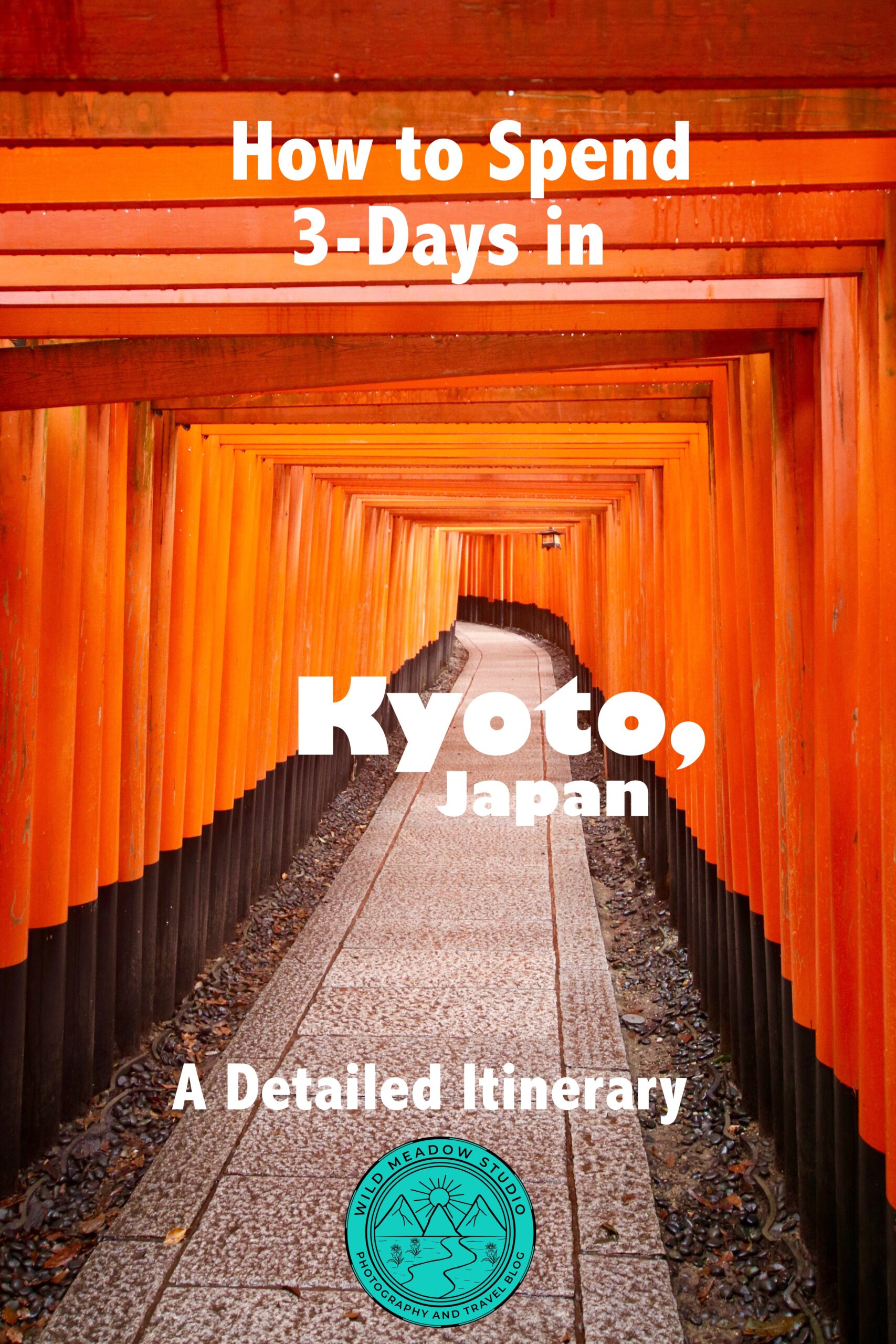
Plan Better. Travel Deeper. Capture More.
Our relaxed, early morning travel style is something we love, so much so, we wrote a blog and 2 free downloadable travel guides on it, “Your Daily Slow Travel Planner + Bonus Relaxed Morning Blueprint” request your free copies at the top of the page or through one of our pop ups.
Planning a trip to this destination?
We offer a personalized travel planning service to help you build a relaxed, memorable trip that’s uniquely yours. Contact us today to make your appointment and let’s plan something special. Your initial planning session is complimentary, in hopes that when you start to book your trip, accommodations, car rentals, trains, tours, or activities you would consider using our recommended affiliate links, as we would then get a small commission that would help support our business, at no additional cost to you.
For more on Kyoto, Japan, checkout our other articles “Top 7 Things to do in Kyoto, Japan: Pavilions, Shrines, & Tranquil Moments”, and “Travel Guide to Kyoto, Japan: Where to Stay, Eat, & Essential Tips” (coming Sept. 8th).
For flights, car rentals, activities, and stays we use Expedia, if you make an account with them, you will earn One Key Cash (travel dollars), with each booking, to go towards your next adventure. For tours, activities, and more, we use Get Your Guide or Viator. For train travel, we use the convenient OMIO App.
Disclosure: Some of the links in this post are affiliate links. This means that if you choose to make a booking or purchase through one of these links, we may earn a small commission at no additional cost to you. We only recommend places, experiences, and products that we have personally used or genuinely believe add value to a trip.
Table of Contents:
- Introduction
- Map overview
- Day 1: Visit Arashiyama & The Golden Pavilion
- Day 2: Fushimi Inari Shrine, Nishiki Market, & Time to Wander
- Day 3: The Silver Pavilion, Philosophers Path, & The Gion District
- References
- The Wrap Up
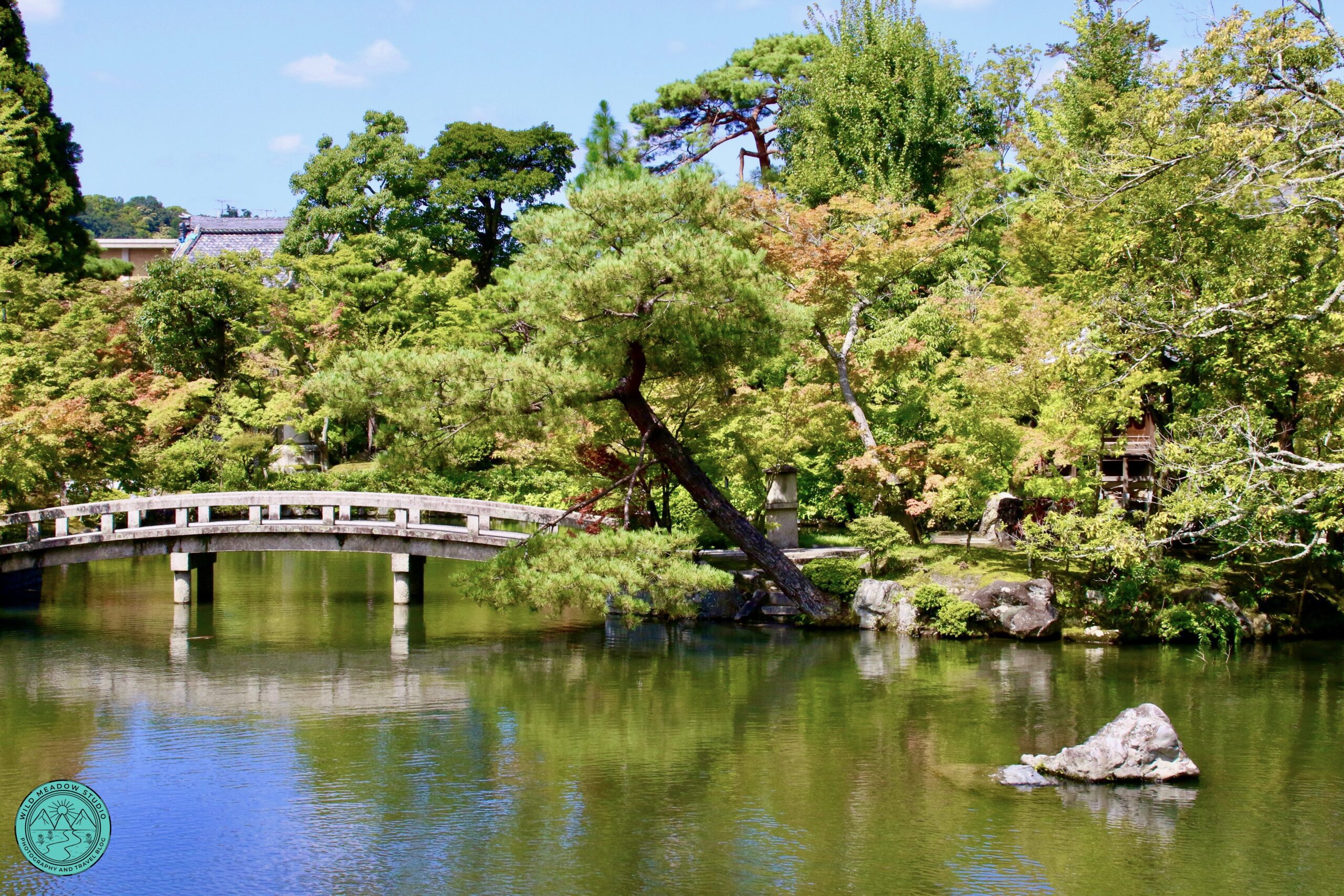
Eikan-dō Zenrin-ji Temple Grounds
1. Introduction:
Kyoto is one of those cities that can feel overwhelming at first. With hundreds of temples and shrines, traditional neighbourhoods, bustling markets and countless places worth exploring, it would be easy to fill an entire week and still leave with a list of things you didn’t get to see.
But if you only have three days in Kyoto, you can still experience some of the city’s most beautiful and memorable places without feeling like you’re constantly rushing from one attraction to the next. This Itinerary gives you a good mix of must-see attractions to give you a good feel for this historic city.
For this itinerary, we’re starting early each morning—which we think is one of the best ways to experience Kyoto. The popular sights can become extremely busy later in the day, while the quieter morning hours give you a chance to appreciate the city at a much slower pace. So, we’ve picked the most popular sight in each area to start with each morning so you can enjoy it without the big crowds. Public transportation is easy to use and key in seeing all of the sights in this itinerary.
Over three days, this itinerary takes you from the bamboo forests and mountain views of Arashiyama, to the thousands of vermilion torii gates at the Fushimi Inari Shrine, a selection of temples and along the peaceful Philosopher’s Path before ending your trip wandering through the atmospheric Gion district after dark.
It’s a busy three days, but we’ve built it around starting early, using public transportation to save time, relaxed late afternoons, and leaving enough time to stop, explore and enjoy the places along the way.

2. Map Overview:
Our map of Kyoto gives you a quick overview of the area and where our top 7 things to do are located in and around the city, we tried to group them together logically into our 3-day itinerary to make the most of your time. As well, each morning, we planned to start at the busiest places to avoid crowds and be able to really experience and enjoy each of these special and unique sights.

3. Day 1: Visit Arashiyama & the Golden Pavilion (Kinkaku-Ji):
Bamboo forests, river views, monkeys & the Golden Pavilion –
Getting to Arashiyama
If you’re staying in central Kyoto, there are a few ways to reach Arashiyama. One option we found particularly convenient is the Randen (Arashiyama) Line.
For example, if you’re staying in or around the Nishiki Market area, you can walk to Shijo-Omiya Station and take the Randen (Arashiyama) Line directly to Arashiyama Station. There’s no need to change trains, and the journey takes you right into the heart of Arashiyama.
The Randen (Arashiyama line) is not covered by the Japan Rail Pass, so you’ll need a separate ticket. If you have a JR Pass, another option is to take the JR Sagano Line from Kyoto Station to JR Saga-Arashiyama Station, which is covered by your pass. Both options are shown on the map above.
We recommend starting your first day in Kyoto early and head straight to Arashiyama. This was one of the areas we were most excited to explore, and starting early made a big difference. The Bamboo Forest is one of Kyoto’s most photographed attractions, and from our experience, the crowds build quickly as the morning goes on. Getting there early gave us some quieter moments to really enjoy the atmosphere before continuing on to explore the rest of the area.
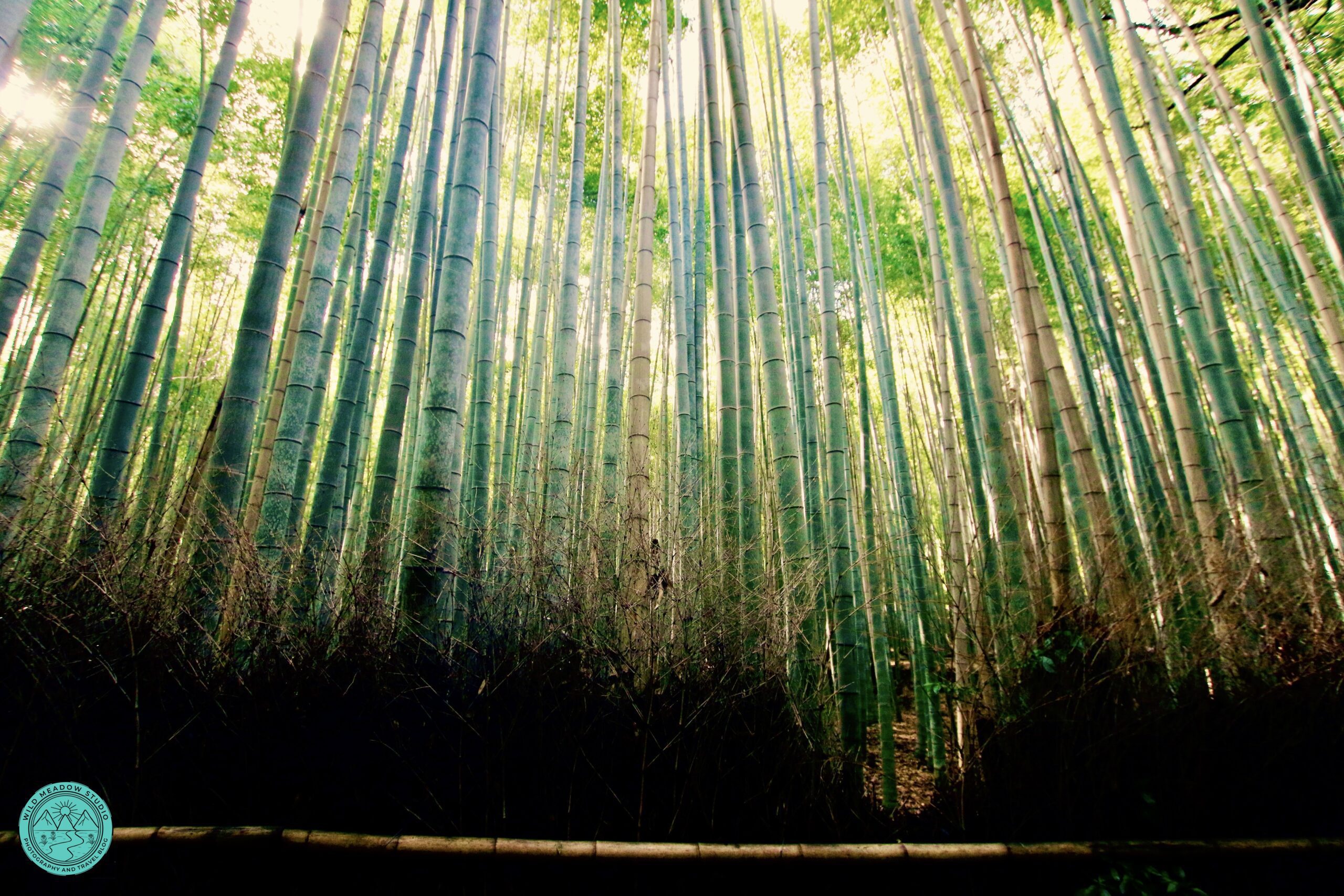
Bamboo Forest
Arashiyama Bamboo Forest –
We began our morning wandering through the Arashiyama Bamboo Forest, walking beneath the towering bamboo and taking in the peaceful feeling of being surrounded by it.
Of course, we stopped to take plenty of photographs along the way—it’s hard not to when you’re surrounded by scenery like this! But we also tried not to rush through it just to get the perfect photo. For us, part of the experience in this tranquil forest was simply being there and taking it all in.
Allow: approximately 45 minutes to 1 hour.
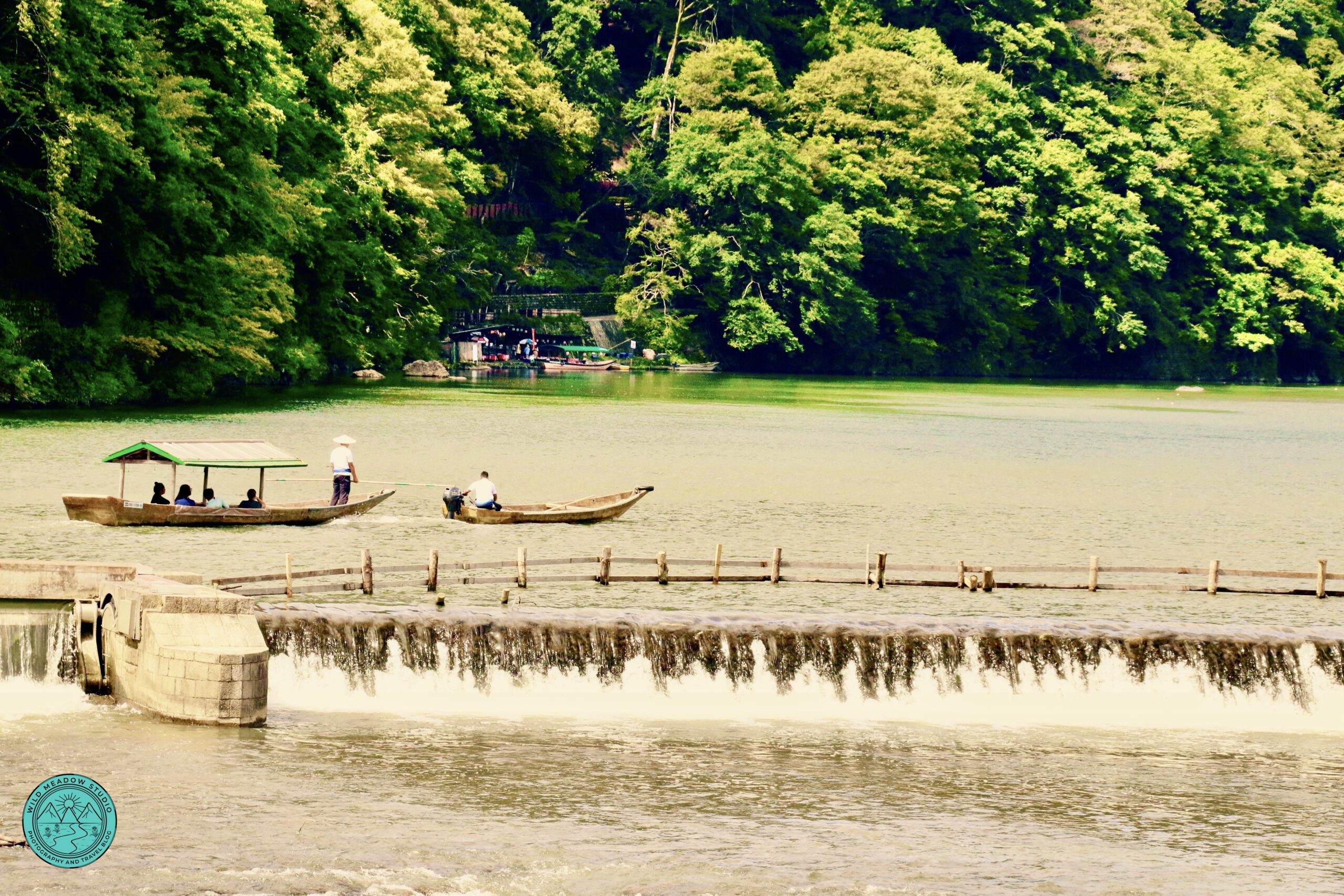
Katsura River
Along the river to Togetsukyo Bridge –
From the Bamboo Forest, we made our way toward the Katsura River, taking our time as we walked along the river and enjoyed the scenery.
We crossed Togetsukyo Bridge, one of the most recognizable landmarks in Arashiyama, and stopped along the way to photograph the river, mountains and surrounding landscape. This was one of those parts of our morning where we were happy to slow down and simply enjoy where we were.
If you’re a photographer—or just someone who loves beautiful scenery—I’d definitely allow yourself some extra time here. There are lovely views in both directions, and the landscape changes as you walk.
Monkey Park
Arashiyama Monkey Park Iwatayama –
After crossing the bridge, we continued on to Arashiyama Monkey Park Iwatayama.
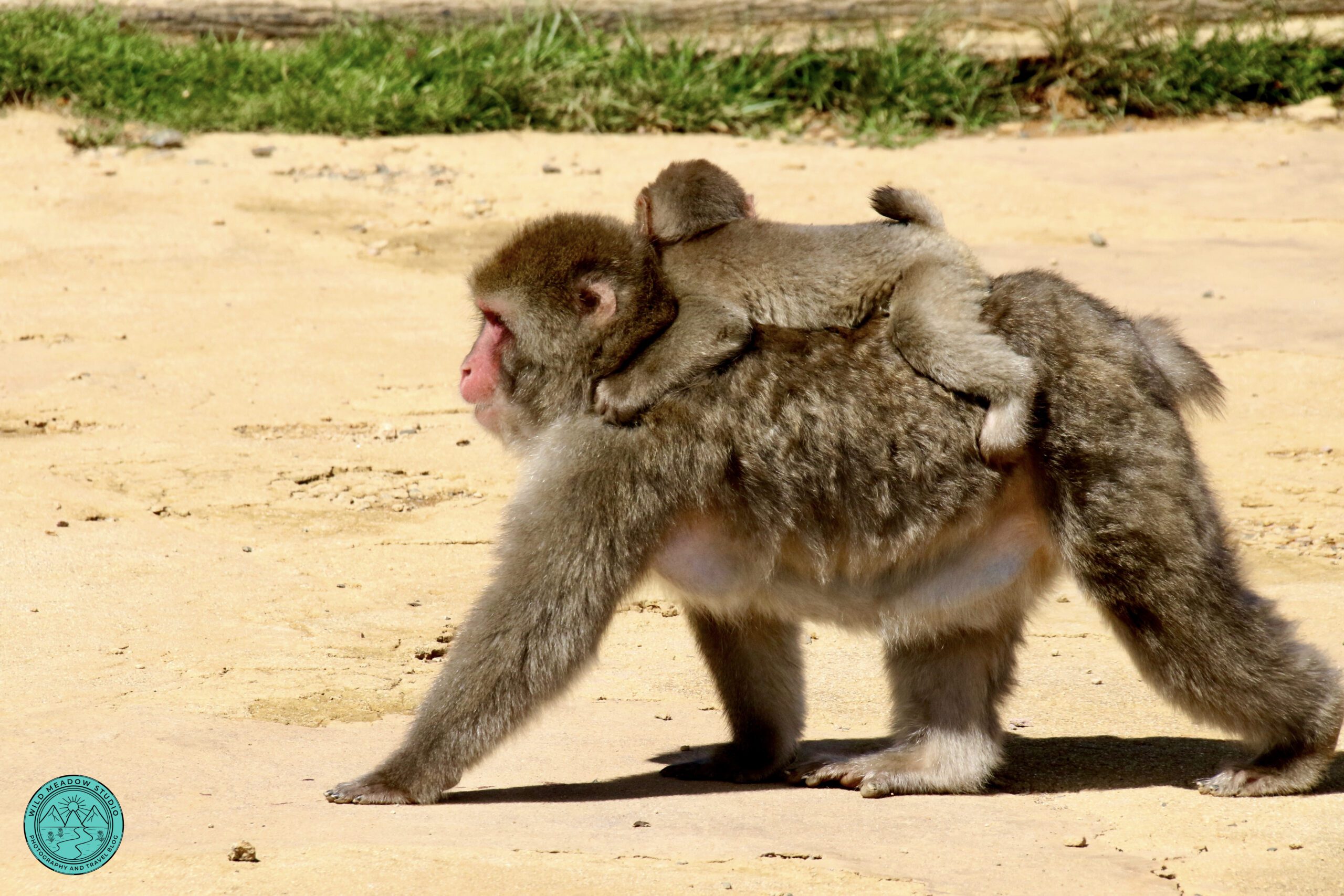
Getting to the park involves a fairly steep uphill hike, so this is the part of the morning where you’ll want comfortable shoes and a little energy! The climb is worth it, though. Once we reached the top, we were rewarded with views across Kyoto as well as the chance to see the Japanese macaques that call the mountain home, they were running all around the area, climbing trees, the babies were playing or clinging to their moms, it was very cute.
We spent some time enjoying the monkeys and taking in the panoramic views before making our way back down.
Allow: approximately 1½–2 hours, including the hike.
Lunch in Arashiyama –
After a busy morning of walking and exploring, we stopped for lunch in Arashiyama.
There are plenty of places to eat in the area, from casual cafés to traditional Kyoto restaurants, so this is a good place to take a break before continuing with your afternoon.
We’d recommend giving yourself at least an hour or so for lunch. One thing we’ve learned from our travels is that you don’t want to spend the entire day rushing from one attraction to the next. Sit down, enjoy a good meal and take a little time to recharge.
Arashiyama to Kinkaku-ji –
After lunch, we headed toward Kinkaku-ji, the Golden Pavilion.
Since we had a Japan Rail Pass, we chose to use the JR train for part of the journey.
From Arashiyama, make your way to JR Saga-Arashiyama Station and take the JR Sagano Line toward Kyoto. Get off at Emmachi Station.
The JR portion of this journey is covered by the Japan Rail Pass.
From Emmachi Station, walk to the nearby Nishinokyo Emmachi bus stop and take either Kyoto City Bus #204 or #205 to Kinkakuji-michi. The bus is not covered by the JR Pass, so you’ll need to pay the fare separately.
From Kinkakuji-michi, it’s about a 5-minute walk to the entrance of Kinkaku-ji.
This was a fairly easy way for us to make our way across Kyoto without having to navigate a long bus journey through the city.
Alternatively, you could take the Arashiyama (Kitano) line to Kitano-Hakubaichō, then walk 20 mins north to the Golden Palace (Kinkaku-Ji).
The Golden Pavilion
Kinkaku-ji — The Golden Pavilion –
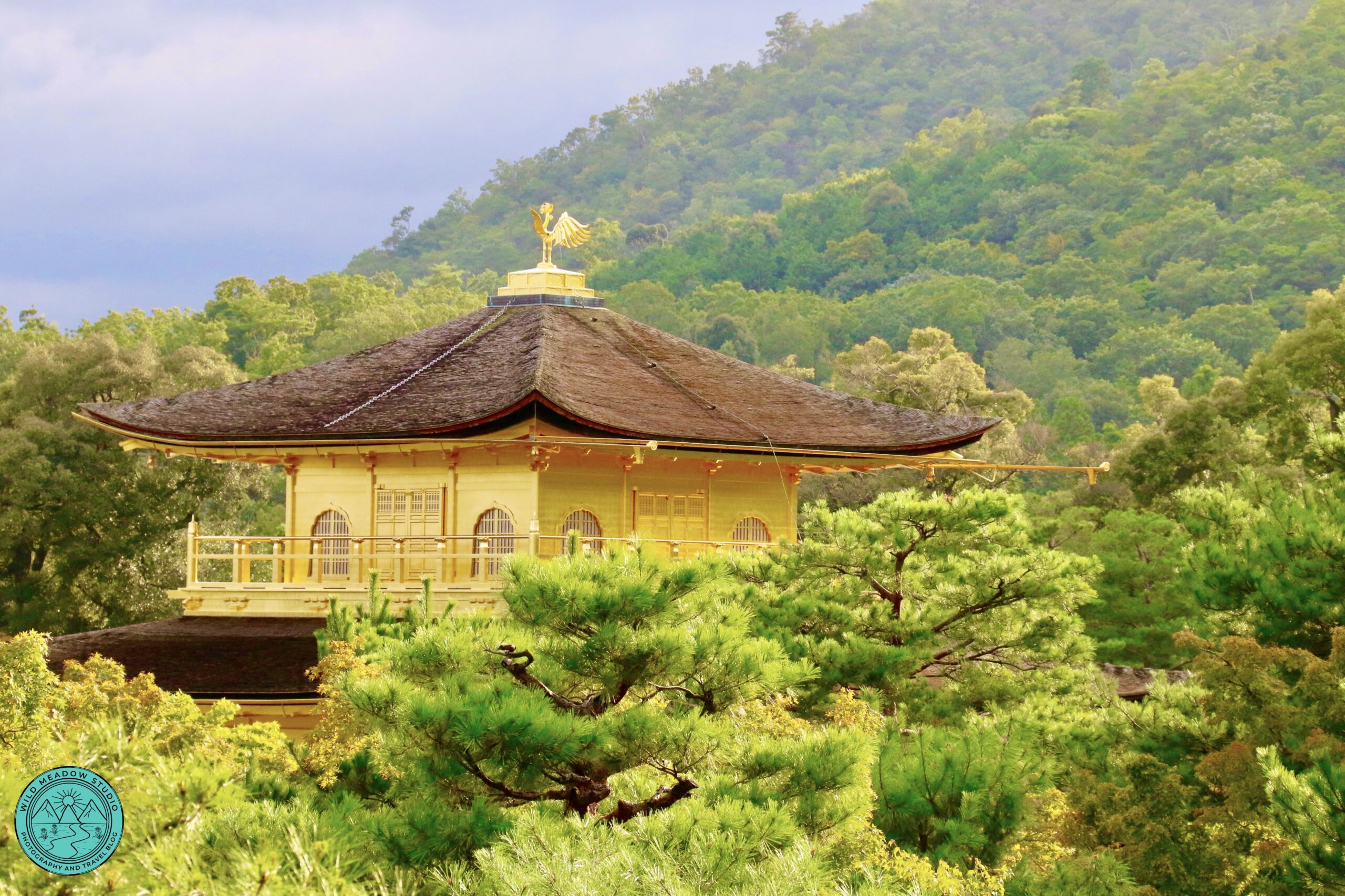
Our final stop of the day was Kinkaku-ji, better known as the Golden Pavilion.
After spending the morning surrounded by bamboo, mountains and the river in Arashiyama, arriving at Kinkaku-ji felt like a completely different side of Kyoto.
The pavilion itself is striking, particularly when its golden exterior is reflected in the pond surrounding it. We took our time walking through the grounds, stopping for photographs and enjoying the gardens before calling it a day.
Allow: approximately 45 minutes to 1 hour (or more depending on how many photos you take).
Our Day 1 in Kyoto
Early morning: Arashiyama Bamboo Forest
Morning: River walk & Togetsukyo Bridge
Late morning: Monkey Park
Lunch: Arashiyama
Afternoon: JR train + bus to Kinkaku-ji
Late afternoon: Golden Pavilion
Our tip: Start early. We found that Arashiyama was a completely different experience in the quieter morning hours, and it allowed us to enjoy the Bamboo Forest, river and Monkey Park before the area became much busier.

4. Day 2: Fushimi Inari Shrine, Nishiki Market & Time to Wander:
Thousands of Torii Gates, a Mountain Climb & Kyoto’s Kitchen
For our second day in Kyoto, we started early and made our way to Fushimi Inari Taisha Shrine. This was one place where getting an early start made a huge difference for us. When we arrived, the trail was practically empty, giving us the chance to enjoy and photograph the famous torii gates without the crowds.
Getting to Fushimi Inari from Central Kyoto –
If you’re staying in central Kyoto, around the Nishiki Market area, we recommend taking the Keihan Main Line from Gion-Shijo Station.
From Gion-Shijo, take a southbound train that stops at Fushimi-Inari Station. The journey is only about 6 minutes and doesn’t require a transfer. Be sure to check that you’re taking a train that stops at Fushimi-Inari, as Limited Express trains do not stop here.
From the station, it’s just a 5-minute walk to Fushimi Inari Taisha.
Another option: If you’re staying closer to Kyoto Station, take the JR Nara Line to Inari Station. The station is directly beside the shrine entrance, and this journey is covered by the Japan Rail Pass.
Torii Gates at Fushimi Inari Shrine
Fushimi Inari Shrine –
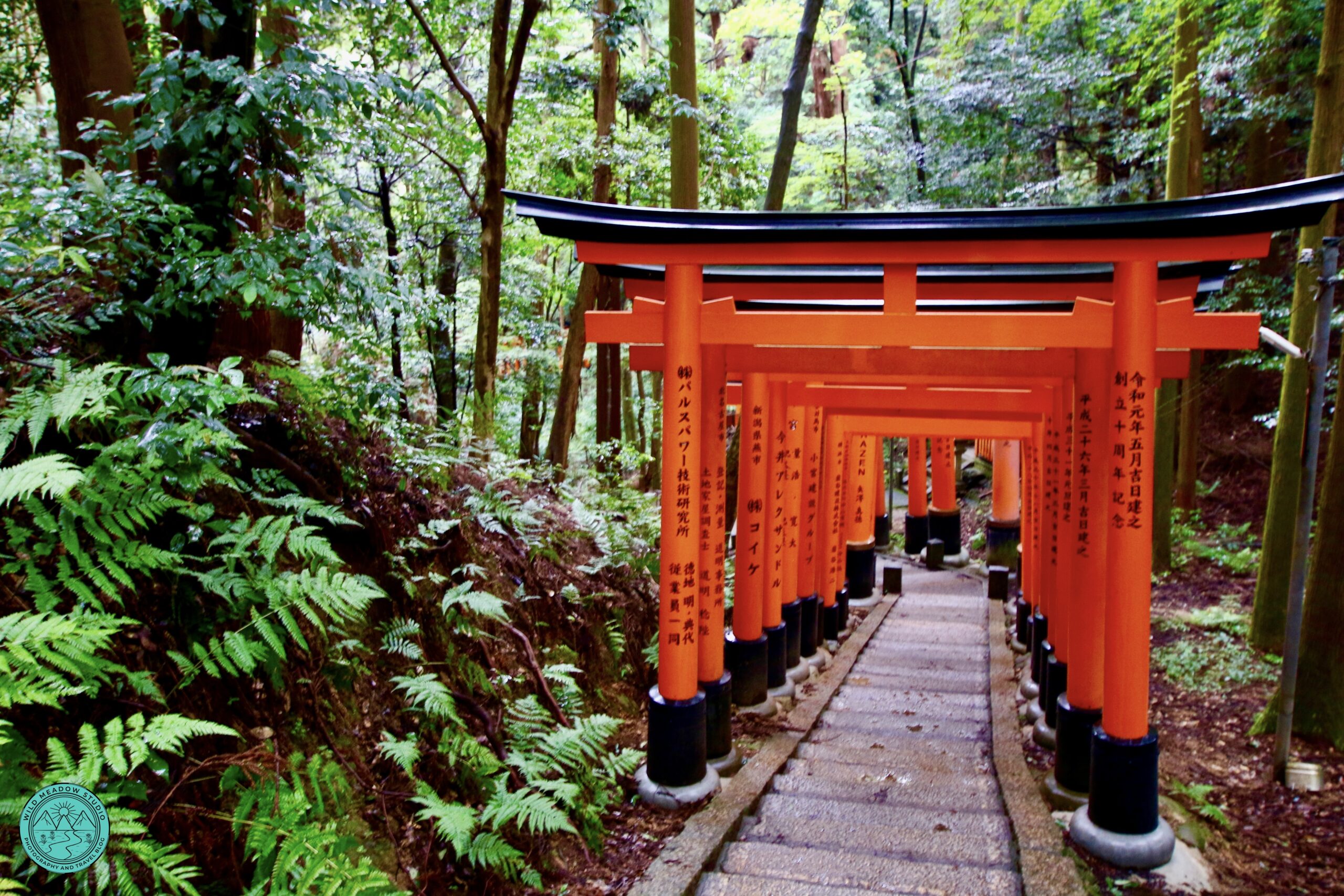
We arrived early and headed straight for the famous torii gates of Fushimi Inari.
The thousands of vibrant vermilion gates wind their way up Mount Inari, creating one of Kyoto’s most recognizable—and memorable—sights. Because we arrived early, we were able to walk through the first sections with very few people around us, stopping whenever we wanted to take photographs or simply enjoy the atmosphere.
Climbing Mount Inari –
The trail gradually winds uphill through the forest, passing countless torii gates, smaller shrines and stone fox statues along the way.
It’s a fairly strenuous climb, with plenty of stairs, but we found it well worth the effort. As we climbed higher, the experience became much more peaceful.
Reaching the summit was an accomplishment, but for us, the journey itself was just as enjoyable. We took our time along the way, stopping for photographs and enjoying the changing scenery.
After spending some time at the top, we made our way back down.
And this is when we really noticed how much our early start had helped.
The trail that had been practically empty when we began was now completely packed.
About halfway down on our way back the crowds started and by the time we got to the beginning of the tranquil path we were shoulder to shoulder with the other tourists, this just reinforced our theory of it being well worth getting up early for.
Allow: Approximately 3–4 hours if you plan to climb to the summit and take your time along the way.
Fushimi Inari → Nishiki Market –
After making our way back down from Mount Inari, we headed back toward central Kyoto and our next stop, Nishiki Market.
From Fushimi-Inari Station, we took the Keihan Main Line northbound to Gion-Shijo Station. From there, Nishiki Market is approximately a 10–15-minute walk through the heart of central Kyoto.
Nishiki Market
Nishiki Market –
After a morning of climbing Mount Inari, we were definitely ready for some lunch!
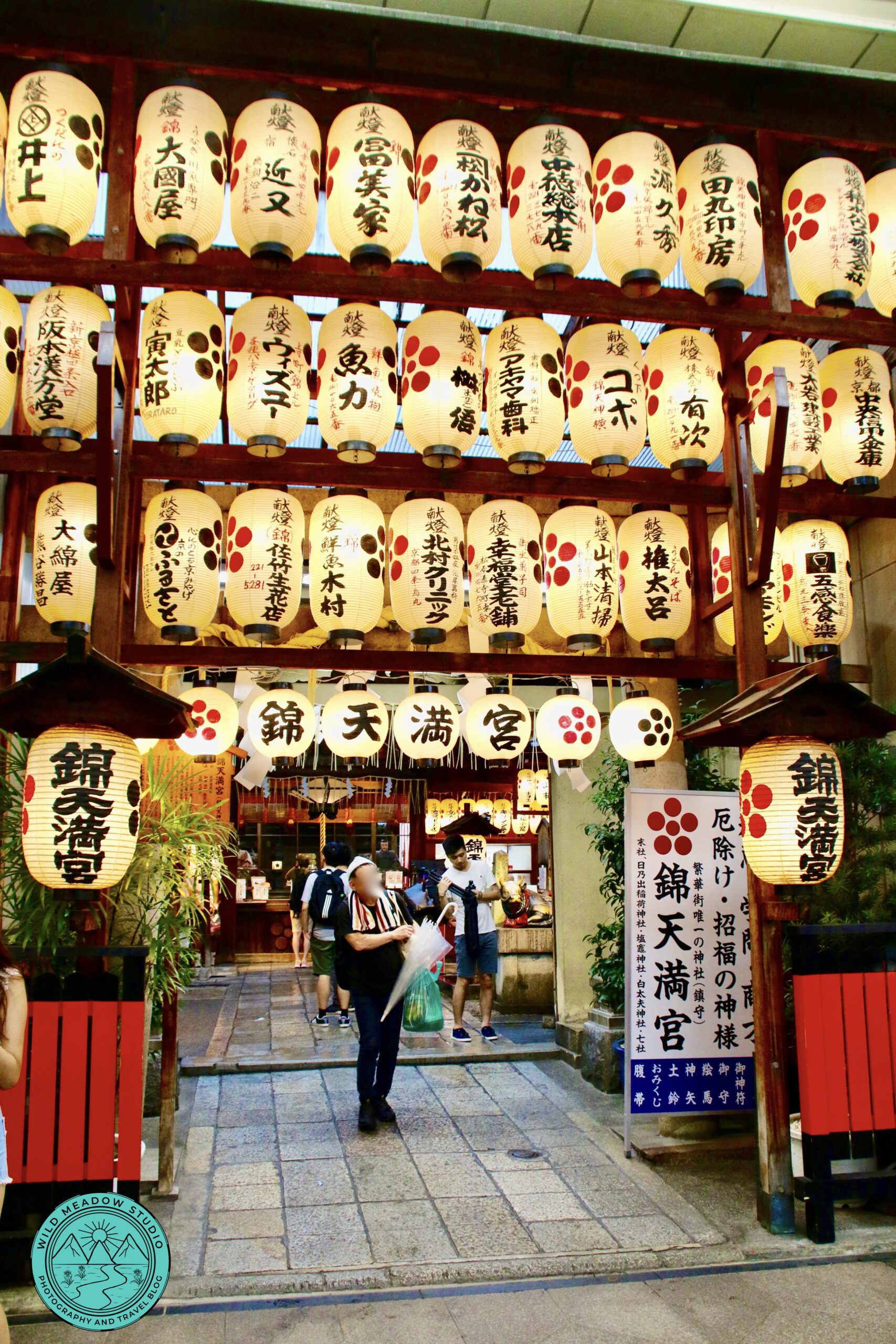
Known as “Kyoto’s Kitchen,” Nishiki Market is a narrow-covered shopping street filled with food stalls, specialty shops and vendors selling everything from fresh seafood and pickles to sweets, tea and other Japanese treats.
We enjoyed simply wandering through the market, taking in all the different foods and stopping to try a few things along the way.
It’s a fun place to explore without a strict agenda. Take your time, see what catches your eye and don’t be afraid to try something new.
We’d recommend allowing plenty of time here for both exploring and lunch before continuing on to explore more of central Kyoto.
Our Day 2 in Kyoto –
Early morning: Fushimi Inari Taisha Shrine
Morning: Walk the torii gates & climb Mount Inari
Late morning: Descend Mount Inari & return to central Kyoto
Lunch: Nishiki Market
Afternoon: Explore Nishiki Market & central Kyoto
Our tip: Start early. Fushimi Inari is open 24 hours a day, and we found that arriving early made a huge difference. When we began our climb, the trail was practically empty, but by the time we reached the top of Mount Inari and made our way back down, the lower sections were completely packed. For us, those quiet early hours made the experience so much more enjoyable.

5. Day 3: Silver Pavilion, Philosopher’s Path & The Gion District:
A Peaceful Temple, a Scenic Walk & an Evening in Gion
For our final full day in Kyoto, we headed east to begin our morning at Ginkaku-ji, the Silver Pavilion, before making our way slowly down the Philosopher’s Path. Rather than rushing from one major attraction to the next, we enjoyed taking our time along the way, stopping at some of the smaller temples and shrines we discovered as we walked.
By the afternoon, we continued into Gion, where we spent the rest of the day exploring the historic streets and enjoying the atmosphere into the evening.
Getting to Ginkaku-ji from Central Kyoto
If you’re staying in central Kyoto, the easiest way to reach Ginkaku-ji is generally by bus.
From the central Kyoto area, take a Kyoto City Bus toward Ginkakuji-michi. From the bus stop, it’s approximately a 10-minute walk to the entrance of Ginkaku-ji.
Because bus routes can vary depending on exactly where you’re staying, we recommend checking the current Kyoto City Bus route from your accommodation before setting out. A good place to catch a bus is the Shijo Kawaramachi bus top near Shijo-Dori Street where the Market is, there are a lot of options there, this is where we caught the bus, you can take bus #5 or #32 and get off at the Ginkakuji-Michi stop (it takes approx. 20 mins, plus the 10 mins walk, but I’d allow about 40 mins for travel time).
Another option: You can take the Keihan Line North to Demachiyanagi Station and continue by bus or walk from there (30mins), not necessarily the quickest option, but not a bad one either.
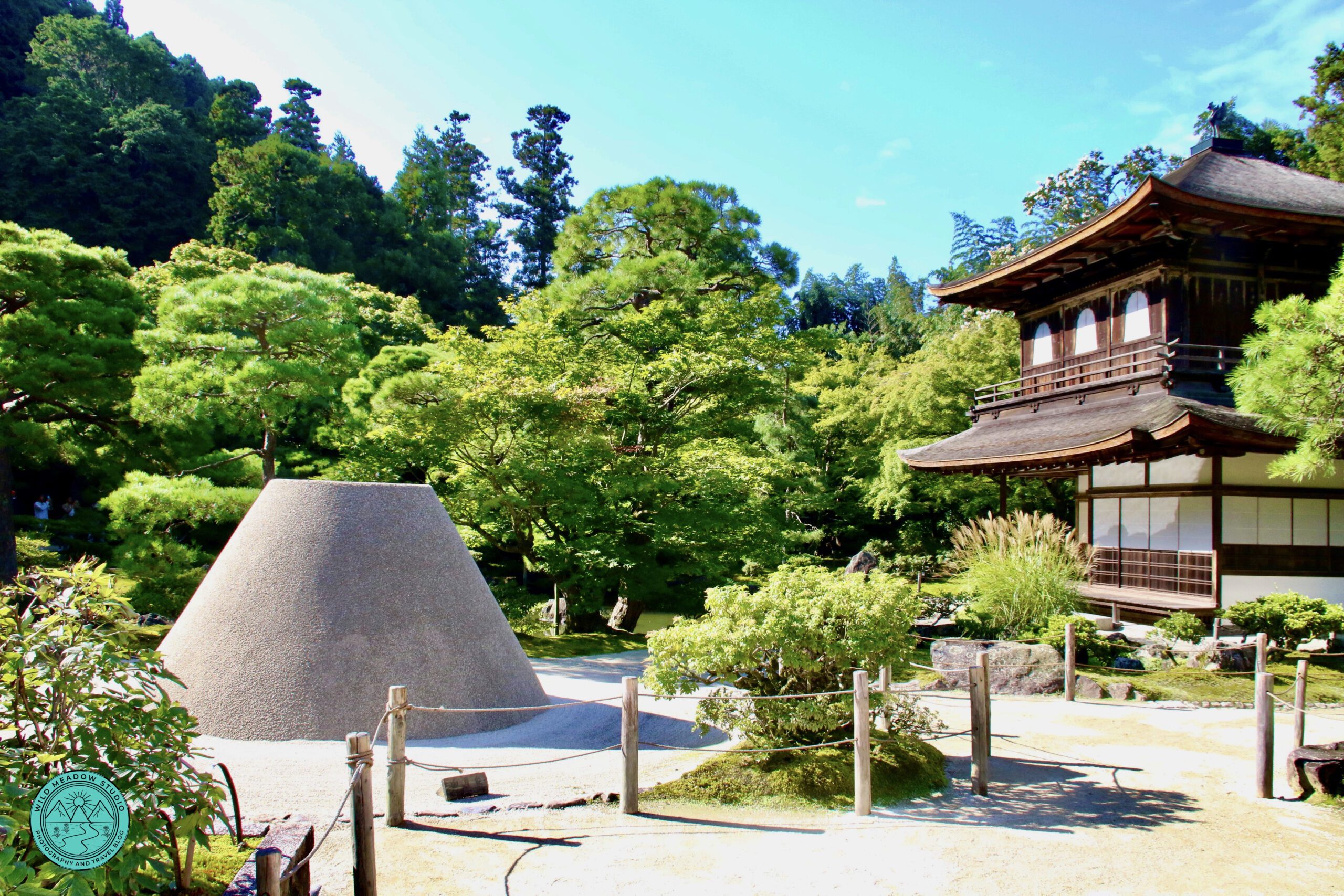
The Silver Pavilion & Zen Garden
Ginkaku-ji — The Silver Pavilion –
We started our morning at Ginkaku-ji, also known as the Silver Pavilion.
Despite its name, the pavilion isn’t actually covered in silver. It was originally intended to be, but the plans were never completed. Today, the temple is surrounded by beautiful gardens, and wooded hills, creating a peaceful start to the day.
We took our time exploring the temple and the grounds before continuing toward the Philosopher’s Path.
The gardens are particularly lovely, with carefully landscaped ponds, moss-covered areas and traditional Japanese sand filled Zen Garden design.
Allow: Approximately 1–1½ hours to explore the temple and gardens.
The Silver Pavilion opens between 8:30am and 9:00am depending on the time of year.
Our recommendation: Arrive in the Ginkaku-ji area around 8:00 a.m. Since Ginkaku-ji doesn’t open until 8:30/9:00, we used the time to walk a short section of the Philosopher’s Path and enjoy the peaceful morning atmosphere. It gave us a chance to take photographs along the canal and path before returning to Ginkaku-ji for opening. Once we’d explored the Silver Pavilion and its gardens, we continued south along the Philosopher’s Path, stopping at the temples and shrines along the way.
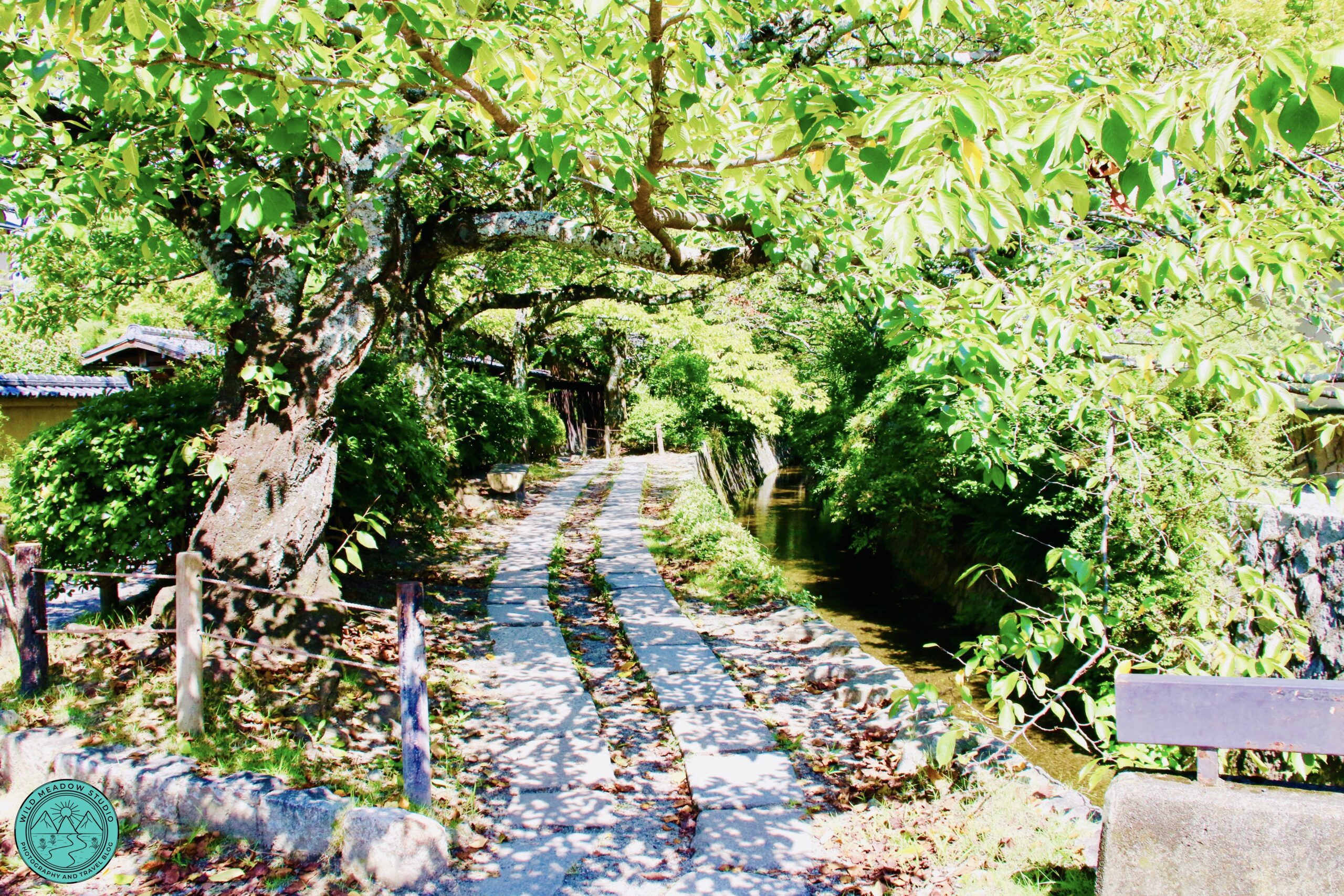
The Philosopher’s Path
Walk the Philosopher’s Path –
From Ginkaku-ji, we continued on foot along the Philosopher’s Path, a scenic stone walkway following the canal toward the southern end of the route.
The path is approximately 2 kilometres long and takes around 30–45 minutes to walk without stops—but we wouldn’t recommend walking it that way!
For us, the beauty of the Philosopher’s Path was in taking our time. We stopped to photograph the scenery, enjoy the canal and explore some of the temples and shrines along the way.
Temples & Shrines Along the Way –
One of the things we enjoyed most was that the Philosopher’s Path isn’t simply a walk from one destination to another. There are several temples and shrines nearby, giving you plenty of opportunities to step away from the main path and explore.
Depending on how much time you have, consider stopping at:
- Hōnen-in — a peaceful temple tucked away among the trees, with a beautiful moss-covered entrance.
- Eikan-dō Zenrin-ji — known for its beautiful gardens and colourful autumn foliage.
- Nanzen-ji — one of Kyoto’s major Zen temples, with an impressive entrance gate and historic aqueduct.
You don’t need to visit every temple along the route. We found it more enjoyable to choose a few that caught our interest and allow ourselves time to wander.
Allow: Approximately 2–3 hours for the Philosopher’s Path including stops along the way. It starts at the Silver Pavilion and ends at he Nanzen-ji Temple.
Lunch Along the Way –
There are several small cafés and restaurants around the Philosopher’s Path and surrounding temple areas, making it easy to stop for lunch before continuing toward Gion. We would suggest carrying a small amount of cash with you as some small café’s may not take credit cards.
We recommend not planning your lunch too rigidly. There are plenty of places to stop along the route, and part of the enjoyment is seeing what catches your eye.
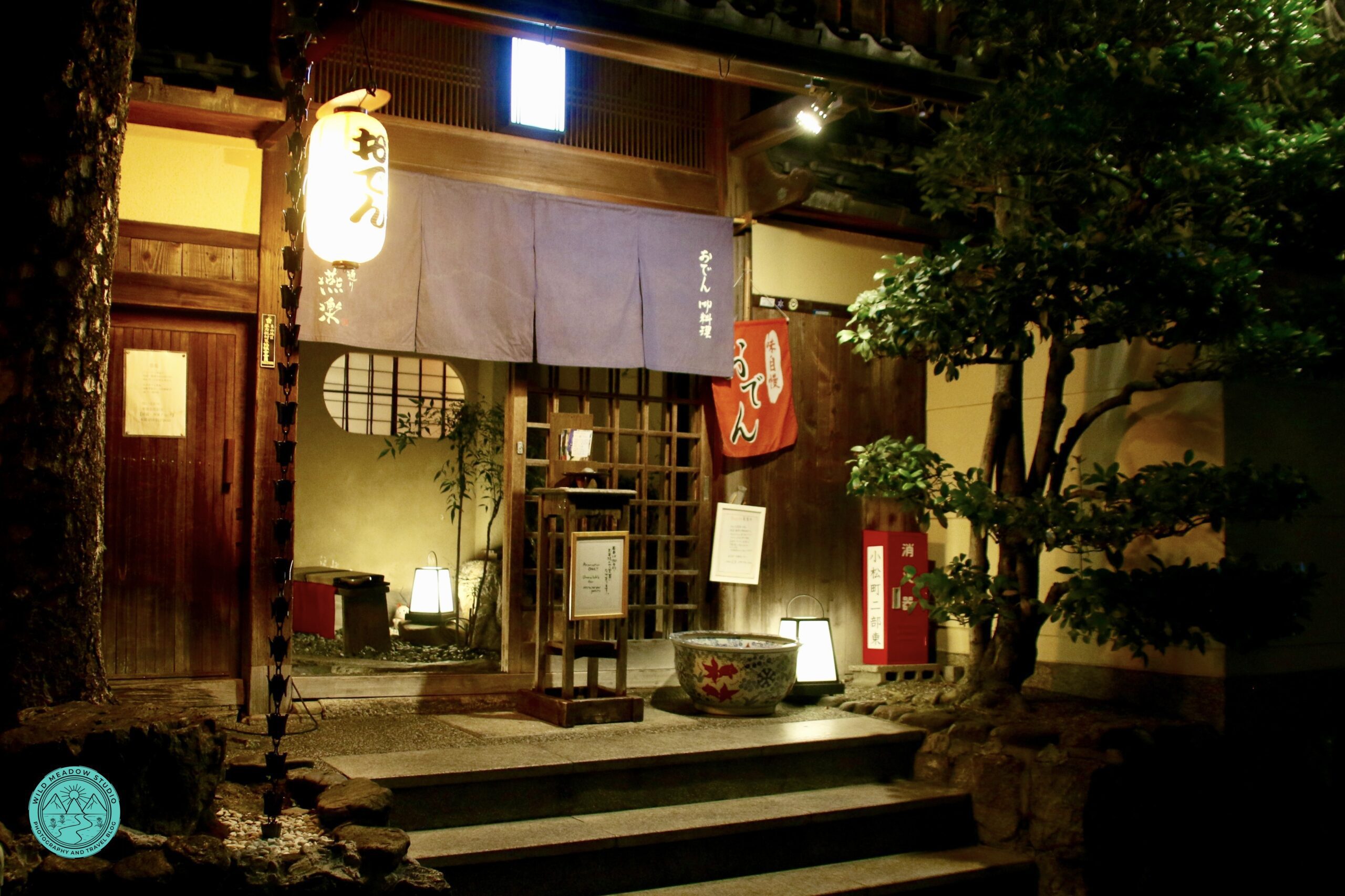
The Gion District at night
Spend the Afternoon & Evening in the Gion District –
From the southern end of the Philosopher’s Path, we continued toward Gion, Kyoto’s historic geisha district (old town area). We walked from the Nanzenji temple to the Gion District which took about 30 mins.
Gion is one of those areas where it’s worth putting the itinerary aside for a while and simply wandering the streets.
The traditional wooden machiya houses, narrow lanes and beautifully preserved architecture make it one of the most atmospheric parts of Kyoto.
We spent the afternoon exploring the area before staying into the evening, when the character of Gion changes again as the lanterns begin to glow and the streets take on a completely different atmosphere.
Explore Gion in the Evening –
Make your way through some of Gion’s most beautiful streets, including Hanamikoji Street and the atmospheric lanes around Yasaka Shrine.
Take your time but remember that Gion is a living neighbourhood. Be respectful of residents and avoid photographing geisha without permission.
For us, ending the day in Gion was the perfect way to finish our Kyoto itinerary.
Our Day 3 in Kyoto –
Early morning: Ginkaku-ji (Silver Pavilion)
Late morning: Walk the Philosopher’s Path
Midday: Explore temples & shrines along the way
Lunch: Along the Philosopher’s Path
Afternoon: Explore Gion District
Evening: Gion & Yasaka Shrine
Our tip: Don’t rush the Philosopher’s Path. The walk itself is only part of the experience. Give yourself time to wander into the smaller temples and shrines along the way, stop for photographs and enjoy the peaceful scenery. Then save your afternoon and evening for Gion, when the historic streets take on an entirely different atmosphere.
A perfect way to finish our Kyoto adventure, three days, three very different sides of Kyoto—and still plenty of reasons to come back.
Plan. Travel. Capture.
6. References:
For our Kyoto, Japan Travel Series, we created our top things to do, itinerary, and tips and recommendations from our own experiences we had while visiting this beautiful, unique city, as well, we read the helpful travel books like, Eyewitness Travel Japan, which helped shape our adventure. In addition, we like to explore the official tourism websites, (Kyoto.travel/en/) attraction sites, public transportation resources (like buses, ferries, and trains), and a few local food blogs to see what local foods piques our interest. Google Maps for driving and walking distances, travel apps like OMIO for train travel and tour apps for any activities, like Get Your Guide, Viator or Expedia. We hope you find this 3-day itinerary helpful when planning your own adventure to this stunning city.
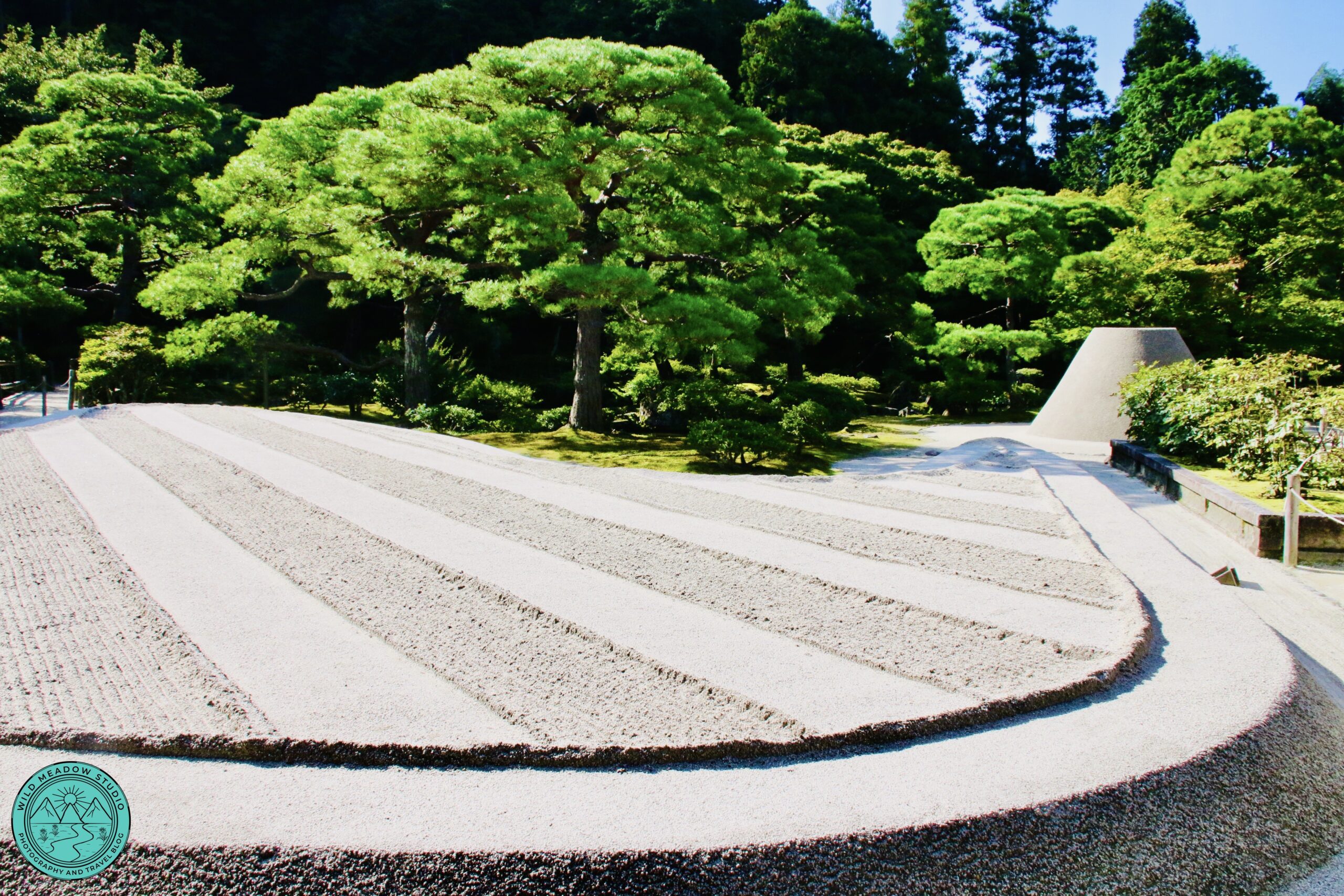
Zen Garden
7. The Wrap Up:
Three days in Kyoto will only give you a taste of everything this incredible city has to offer, but with an early start each morning and a little planning, you can experience a wonderful mix of temples, shrines, traditional neighbourhoods, markets, nature, food and everyday Kyoto life.
What we particularly like about this itinerary is that it doesn’t try to cram every famous attraction into three days. Instead, it focuses on a few key areas and gives you time to actually experience them.
You’ll walk through the bamboo forests of Arashiyama, climb through the endless torii gates of Fushimi Inari, wander the Philosopher’s Path, discover local flavours at Nishiki Market and finish your trip beneath the glowing lanterns of Gion.
And while the early mornings mean setting that alarm clock a little sooner than you might like, we think it’s worth it. Kyoto’s most famous places can become incredibly busy, while those first quiet hours of the day allow you to experience them at a much more relaxed pace.
Most importantly, don’t be afraid to leave a little room in your itinerary. Some of your favourite Kyoto memories may come from the places you never planned to find.
Planning a trip to this destination?
We offer a personalized travel planning service to help you build a relaxed, memorable trip that’s uniquely yours. Contact us today to make your appointment and let’s plan something special. Your initial planning session is complimentary, in hopes that when you start to book your trip, accommodations, car rentals, trains, tours, or activities you would consider using our recommended affiliate links, as we would then get a small commission that would help support our business, at no additional cost to you.
Our relaxed, early morning travel style is something we love, so much so, we wrote a blog and 2 free downloadable travel guides on it, “Your Daily Slow Travel Planner + Bonus Relaxed Morning Blueprint” request your free copies at the top of the page or through one of our pop ups.
Plan Better. Travel Deeper. Capture More.
Thank you,
Beth
Beth de Verteuil
Wild Meadow Studio
Travel Guides & Photography
Plan. Travel. Capture.