
Our relaxed, early morning travel style is something we love, so much so, we wrote a blog and 2 free downloadable travel guides on it, “Your Daily Slow Travel Planner + Bonus Relaxed Morning Blueprint” request your free copies at the top of the page or through one of our pop ups.
For flights, car rentals, activities, and stays we use Expedia, if you make an account with them, you will earn One Key Cash (travel dollars), with each booking, to go towards your next adventure. For tours, activities, and more, we use Get Your Guide or Viator. For train travel, we use the convenient OMIO App.
Disclosure: Some of the links in this post are affiliate links. This means that if you choose to make a booking or purchase through one of these links, we may earn a small commission at no additional cost to you. We only recommend places, experiences, and products that we have personally used or genuinely believe add value to a trip.
Table of Contents:
- Introduction
- What you need to know before you go
- The Wrap up

Packing Cubes
1. Introduction:
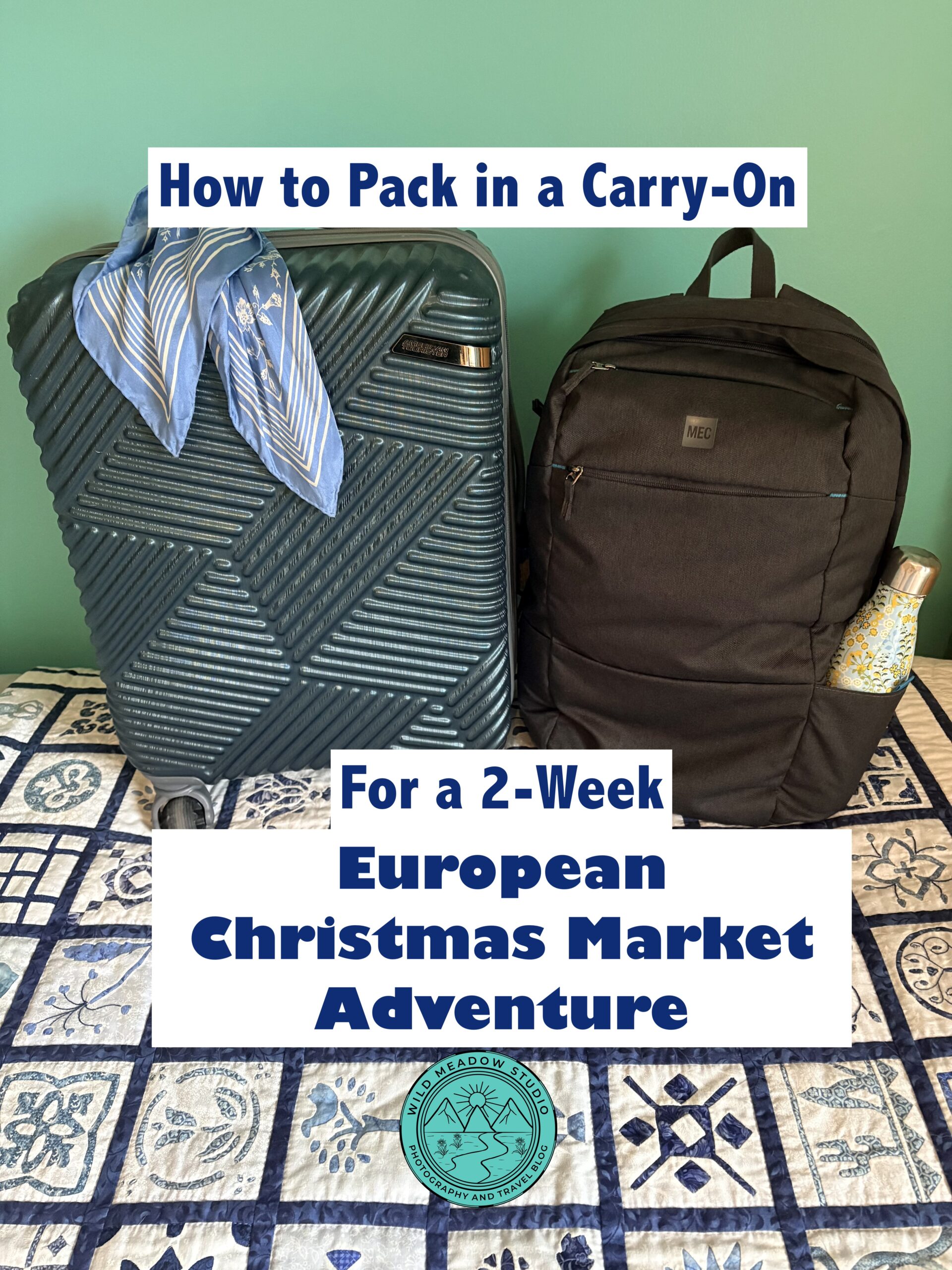
How to pack light for two weeks of winter travel, Christmas markets, sightseeing and photography—with everything you need in a carry-on and personal backpack.
Packing for a two-week winter trip can feel a little overwhelming. Winter clothing takes up more room than summer clothes, and when you add shoes, toiletries and camera equipment, it can be hard to imagine fitting everything into a carry-on.
But you really don’t need to pack two weeks’ worth of clothing.
For our upcoming 2-week European Christmas market road trip, we’re travelling through France, Germany, Austria, Hungary and Czechia, with plenty of walking, outdoor sightseeing, Christmas markets and casual dinners along the way.
We’re each taking one carry-on suitcase and one personal backpack, and we’ll be doing laundry at least 2 to 3 times during the trip. We’re also bringing our DSLR camera with one versatile lens, so we’ve had to think carefully about how to make the most of the space we have. As well, we won’t be bringing any dressy clothes for dinners out as we will be eating meals either at the Christmas markets or casual restaurants, so that will save some space.
Here’s what we’re packing—and some of the things we’ve learned while planning a winter trip like this

Crossbody bag
2. What you need to know before you go:
- Pack for one Week, Not Two –
The biggest difference between packing for two weeks and packing for a week is simple: do laundry.
Rather than bringing fourteen days of clothing, we’re planning to pack approximately one week’s worth and wash our clothes along the way.
We’re also keeping things casual. Most days will involve walking and sightseeing, and some evenings we’ll simply be sampling food at Christmas markets. We don’t need several dressy outfits or a different outfit for every evening.
Our goal is to pack clothing that can be layered, mixed and matched, and worn in different combinations.
A thermal top, long-sleeved shirt and sweater can be combined in several ways, while a good winter coat can be worn every day.
In our carry-on we use a combination of compression cubes and regular cubes, as well, we roll some and fold some of our clothing, giving us maximum flexibility, you would be shocked at how much you can fit in those cubes! Give it a try!
Tip: Go onto your airline’s website and get the exact dimension for your allowable carry-on and personal item sizes, if you will be using multiple airlines, check them all and use the smallest as your allowable size. Airlines are much stricter on this now, as more people are travelling light as the checked bag prices have skyrocketed over the last few years. Also, make sure when you book your flight it says carry-on included as a lot of airlines are making you up upgrade or pay a fee to bring one on-board.
By only having a carry on and a backpack it makes your life so much easier, especially if you’re travelling between cities by train.
- What to Wear on the Plane –
One of the easiest ways to save room in your carry-on is to wear some of your bulkiest clothing while travelling.
We’ll be wearing:
- Comfortable pants
- A long-sleeved shirt
- A sweater or fleece
- Our winter coat
- Warm socks
- Our bulkiest pair of shoes
- A scarf
You can always remove a layer once you’re on the plane, but there’s no reason to use valuable suitcase space for a bulky sweater or coat if you can wear it instead.
- Our Winter Clothing List –
Because we’ll be doing laundry during the trip, we can pack more efficiently.
Tops
- 4 long-sleeved shirts
- 2 warm sweaters/sweatshirts
- 2 thermal base-layer tops
- 1–2 wool short or long sleeve
Bottoms
- 2 pairs of comfortable pants
- 1 pair of jeans or another casual option
- 1 pair of leggings or travel pants
- 1 pair of thermal leggings or base-layer bottoms
Underwear & Sleepwear
- 7–8 pairs of underwear
- 6–7 pairs of wool socks
- 2–3 pairs of regular socks
- 2 bras, if applicable
- 1 pair of pajamas
Winter Layers
- 1 warm winter coat
- 1 lightweight fleece or jacket
- 1 scarf
- 1 pair of gloves
- 1 warm hat
- 1 compact umbrella
- sunglasses
We’re each bringing one good winter coat, rather than trying to pack several different jackets. The coat is our main protection from the cold, while layers underneath allow us to adjust depending on the weather.
- Choose Your Layers Carefully –
When you’re packing for cold weather, it’s tempting to bring several thick sweaters. But bulky clothing can quickly fill a carry-on.
Instead, think in terms of layers.
A thermal base layer can provide warmth without taking up much space. Add a long-sleeved shirt, sweater or fleece, and then your winter coat when you’re heading outdoors.
We’re also considering wool and merino wool for some of our winter layers. Wool socks and base layers can be particularly useful because they’re warm and breathable, and they can often be worn more than once before needing a wash.
They can also be a good choice when you’re travelling somewhere without a dryer because they generally dry quicker than heavy cotton garments.
- Two Pairs of Shoes Are Enough –
Shoes can be one of the biggest space hogs in a suitcase, so we’re keeping this simple.
For our trip, we’re bringing:
Short winter boots – for everyday sightseeing, Christmas markets and casual dinners.
Hiking shoes – for longer walks, trails and outdoor sightseeing where we want a little more support.
We’ll wear whichever pair is bulkier on the plane.
Most importantly, make sure your shoes are comfortable and already broken in. European city centres can mean hours of walking over cobblestones and uneven streets, and Christmas markets often involve standing and walking outdoors for long periods.
A stylish pair of shoes isn’t much use if you can’t comfortably walk in them!
- Don’t Forget Your Camera –
Photography is a big part of our travels, so our camera gear needs to fit into our packing plan too.
We’re bringing our DSLR with one 20–300mm lens, which gives us plenty of flexibility without having to carry several lenses.
Our camera setup includes:
- DSLR camera
- 20–300mm lens
- Small camera bag or crossbody bag
- Extra battery
- Battery charger
- An extra memory card
- Lens cloth
The camera and lens will stay in the small camera bag or crossbody bag, which will then go inside our backpack.
This gives us a little extra protection while travelling, while keeping the camera easily accessible when we want to photograph a beautiful Christmas market, historic building or winter landscape.
We will likely use our small crossbody bag as our camera bag, giving us a little more room to store items and use this crossbody bag when we are doing our sight-seeing. Having a crossbody bag that locks and has the RFID-blocking offer the best for safety and flexibility for your everyday use.
Winter photography tip: Cold temperatures can affect camera batteries, so it’s a good idea to carry a spare battery and keep it somewhere warm, such as an inside coat pocket.
- Your Backpack Is More Than Just a Personal Item –
Our backpacks will be our personal items on the flights, but they’ll also become our day bags once we arrive.
We’ll use them to carry the things we want easily accessible while travelling and sightseeing. Alternatively, pack your smaller crossbody bags into your backpack and use it for your day-to-day sight-seeing.
Our Backpack Checklist
- Camera bag with DSLR & accessories
- Passport and travel documents
- Wallet
- Phone
- Phone charger
- Power bank
- European plug adapter
- Headphones for plane
- Reusable water bottle
- Travel Journal and pen
- Tissues
- Hand sanitizer
- Lip balm
- Hand cream
- Personal medications
- Small umbrella
- Sunglasses
- Snacks
- Laptop & charger if needed
We also want to leave a little room in our backpacks for things we may pick up during the day.
- Keep Toiletries Simple –
Toiletries are another area where it’s easy to overpack.
For a two-week trip, there’s no need to bring full-size bottles of everything, plus you are only allowed to bring 100ml of each liquid item and only 1 litre of all of your liquids combined. We’re keeping our toiletries to the basics and taking travel-sized versions wherever possible.
Toiletry Checklist
- Toothbrush and toothpaste
- Shampoo & conditioner/hair products
- Body wash or soap
- Face wash/wipes
- Moisturizer body/face
- Deodorant
- Hairbrush or comb
- Hair ties
- Razor
- Makeup, if needed
- Lip balm
- Hand cream
- Personal medications & face mask for plane
- Tissues
- Small first aid kit with essentials
- Hand sanitizer
Winter weather can be particularly hard on your skin, so lip balm, moisturizer and hand cream are worth making room for.
And if you’re flying with a carry-on, remember to check your airline’s current rules for liquids and gels before you pack.
- Look for Laundry When Booking Your Accommodation –
One of the things that has made packing for our two-week trip easier is choosing a combination of hotels and VRBO accommodations with laundry facilities.
Some of our accommodations have their own washer and dryer, while others have a washing machine and drying rack.
When you’re booking accommodation for a longer trip, it’s worth looking beyond simply whether the listing says “laundry.”
Check What They Actually Mean by Laundry
There’s an important difference between laundry facilities and laundry service.
Laundry facilities generally mean that there is a washing machine, dryer or shared laundry room available for guests to use.
Laundry service usually means the hotel takes your clothes, has them professionally washed and returned, and charges you for the service.
Laundry service can certainly be convenient, but it can also be considerably more expensive than doing your own laundry.
Before booking, check:
- Is there a washer and dryer?
- Is there only a washing machine?
- Is a drying rack provided?
- Is the laundry private or shared?
- Is there a fee to use the machines?
- Is detergent provided?
- Does “laundry” actually mean laundry service?
If your goal is to pack light, look specifically for “washer,” “washing machine,” or “laundry facilities.”
- Give Your Laundry Time to Dry –
If your accommodation has a washer but no dryer, make sure you allow enough time for your clothes to dry before you move on (we found this out the hard way).
This is particularly important during winter.
It might seem reasonable to put a load of laundry on the night before you leave and hang everything up before bed, expecting it to be dry by morning. But that’s not always going to happen.
Bulky items such as jeans, sweatshirts and heavier sweaters can take considerably longer to dry, especially in a cool room with limited air circulation.
If you’re staying somewhere for several nights, do your laundry earlier in your stay rather than waiting until your last night.
That gives you time to:
- Hang everything properly on a drying rack
- Spread clothing out so air can circulate
- Turn garments over if necessary
- Allow extra time for heavier items to dry
- Make sure everything is completely dry before packing
A little planning can save you from putting damp clothes into your suitcase and having to unpack them and hang them again at your next destination.
- Choose Fabrics That Work for Winter Travel –
This is another reason we’re looking at wool and merino wool for some of our winter clothing.
Wool socks and base layers are warm, breathable and can often be worn more than once before needing a wash. They’re also generally lighter and quicker to dry than heavier cotton clothing.
If you’re travelling with access to a washing machine but no dryer, consider not only how much space a piece of clothing takes up, but also how long it will take to dry.
- Pack for Christmas Markets –
The Christmas markets are one of the highlights of our trip, but they also mean spending plenty of time outdoors in potentially cold and damp weather.
We’ll be making sure we have:
- Warm gloves
- A hat that covers our ears
- A scarf
- Warm socks (wool)
- Comfortable waterproof footwear
- Hand warmers
- Small umbrella
- Portable phone charger
- Reusable water bottle
- Tissues
And because some of our evening meals will actually be tasting our way through the Christmas markets, we don’t need to pack special outfits for every dinner.
Comfortable and warm is the priority!
- What We’re Leaving at Home –
Packing light is just as much about deciding what not to bring.
We’re leaving behind:
- Too many bulky sweaters
- Multiple heavy pairs of shoes
- Full-size toiletries
- A different outfit for every day
- Dressy dinner clothes
- Things we can easily purchase if needed
- Too many “just in case” items
Our rule is simple:
If we’re not sure we’ll use it, we ask ourselves whether it’s worth giving up valuable space in our carry-on, space that could be allocated to bringing something special back home with us.
- Our Complete Winter Carry-On Packing Checklist –
After all that planning, we’ve put together a printable packing checklist you can use for your own winter trip.
Clothing
☐ 4–5 long-sleeved shirts
☐ 2–3 warm sweaters/sweatshirts
☐ 2–3 thermal tops
☐ 2–3 pairs of comfy pants/jeans
☐ 1 pair of leggings/travel pants
☐ 1 pair of thermal leggings
☐ 7–8 pairs of underwear
☐ 6-7 pairs of wool socks
☐ 2–3 pairs of regular socks
☐ 2 bras, if applicable
☐ 1 pair of pajamas
☐ 1 winter coat
☐ 1 lightweight fleece/jacket
☐ 1 scarf
☐ 1 pair of gloves
☐ 1 warm hat/Sunglasses
Shoes
☐ Short winter boots
☐ Hiking shoes
Camera & Electronics
☐ DSLR camera
☐ 20–300mm lens
☐ Small camera bag/crossbody bag
☐ Extra camera battery
☐ Camera charger
☐ Memory cards
☐ Lens cloth
☐ Lab top & charger if needed
☐ Phone & charger
☐ Power bank
☐ European plug adapter
☐ Headphones for plane
Toiletries
☐ Toothbrush & toothpaste
☐ Shampoo & conditioner/hair products
☐ Body wash
☐ Face wash/wipes
☐ Moisturizer body/face
☐ Deodorant
☐ Hairbrush/comb
☐ Hair ties
☐ Razor
☐ Makeup, if needed
☐ Lip balm
☐ Small first Aid kit with essentials
☐ Personal medications & face mask for the plane
☐ Tissues
☐ Hand sanitizer/hand cream
Travel Essentials
☐ Passport
☐ Travel documents
☐ Hard copies of all reservations & tickets for tours/activities & itinerary
☐ Wallet & some cash in local currency
☐ Backpack/crossbody bag/money belt
☐ Reusable water bottle
☐ Laundry bag
☐ Laundry detergent sheets
☐ Small umbrella
☐ Hand warmers (optional)
☐ Travel journal and pen
☐ Snacks/electrolyte powder
- Download Our Printable Winter Packing Checklist –
Planning your own European Christmas market adventure?
We’ve created a printable version of our winter carry-on packing list so you can keep it beside you while you’re getting ready for your trip.
[Download the Winter Carry-On Packing Checklist]
Print it, save it to your phone, and check things off as you pack!

Carry-on and Backpack
3. The Wrap Up:
Packing for two weeks in Europe during the winter doesn’t have to mean bringing a huge suitcase.
For us, the key is layers, versatile clothing, comfortable shoes and doing laundry along the way. By choosing accommodations with laundry facilities, packing approximately a week’s worth of clothing, and keeping our dinners casual, we’re able to keep everything manageable.
There will be Christmas markets, historic towns, beautiful landscapes, plenty of walking, good food and lots of opportunities to take photographs.
And that’s really all we need.
Planning a trip to one of our many destinations?
We offer a personalized travel planning service to help you build a relaxed, memorable trip that’s uniquely yours. Contact us today to make your appointment and let’s plan something special. Your initial planning session is complimentary, in hopes that when you start to book your trip, accommodations, car rentals, trains, tours, or activities you would consider using our recommended affiliate links, as we would then get a small commission that would help support our business, at no additional cost to you.
Our relaxed, early morning travel style is something we love, so much so, we wrote a blog and 2 free downloadable travel guides on it, “Your Daily Slow Travel Planner + Bonus Relaxed Morning Blueprint” request your free copies at the top of the page or through one of our pop ups.
Plan Better. Travel Deeper. Capture More.
Thank you,
Beth
Beth de Verteuil
Wild Meadow Studio
Travel Guides & Photography
Plan. Travel. Capture.