
Plan. Travel. Capture.
Our relaxed, early morning travel style is something we love, so much so, we wrote a blog and 2 free downloadable travel guides on it, “Your Daily Slow Travel Planner + Bonus Slow Morning Blueprint” request your free copies at the top of the page or through one of our pop ups.
Planning a trip to this destination?
We offer a personalized travel planning service to help you build a relaxed, memorable trip that’s uniquely yours. Contact us today to make your appointment and let’s plan something special. Our initial planning session is complimentary. If you choose to book accommodations, car rentals, trains, tours, or activities through our recommended affiliate links, it helps support our small business, at no additional cost to you.
For more on Provence, France, checkout our other articles “Best Towns & Sights in Provence, France: Plus, Nearby Gems worth the Trip”, and “How to Spend 4-Days in Provence, France: A Relaxed Itinerary Based in Avignon”.
For flights, car rentals, activities, and stays we use Expedia, if you make an account with them, you will earn travel dollars, with each booking, to go towards your next adventure. For tours, activities, and more, we use Get Your Guide or Viator. For train travel, we use the convenient OMIO App.
Disclosure: Some of the links in this post are affiliate links. This means that if you choose to make a booking or purchase through one of these links, we may earn a small commission at no additional cost to you. We only recommend places, experiences, and products that we have personally used or genuinely believe add value to a trip.
Table of Contents:
- Introduction
- Where to Stay in Avignon/Saint-Quentin-la-Poterie
- Where to Eat in and around Provence
- Essential Local and General Travel Tips
- Our Fav Photo from our time in Provence
- How to make Ratatouille from Provence
- References
- The Wrap up
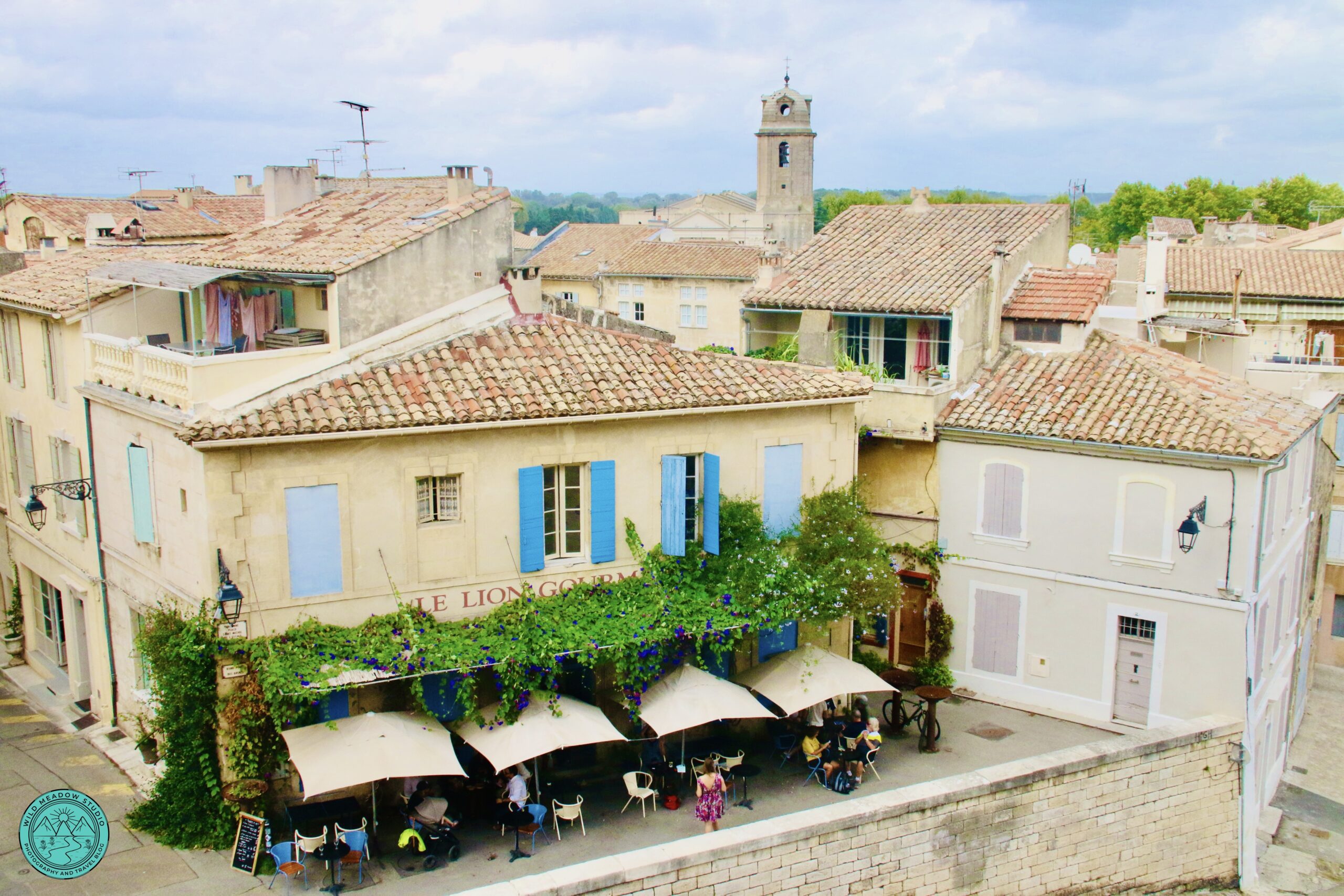
Beautiful Café in Arles
1. Introduction:
With picturesque hilltop villages, vibrant local markets, Roman ruins, rolling vineyards, and endless fields of lavender, Provence is one of France’s most captivating regions. Whether you’re planning to spend your days wandering the historic streets of Avignon, exploring the colourful markets of L’Isle-sur-la-Sorgue, discovering the artistic charm of Arles, or venturing into hidden gems like Saint-Quentin-la-Poterie, choosing the right place to stay can make all the difference.
One of the things we loved most about Provence was that every destination felt close enough for a relaxed day trip. Rather than moving hotels every few nights, we found it much more enjoyable to choose one central base and explore the region at our own pace.
For first-time visitors, we recommend staying in Avignon. Located in the heart of Provence, this historic walled city offers easy access to many of the region’s most popular destinations, while providing an excellent selection of restaurants, cafés, hotels, and evening entertainment. If you’re looking for a quieter, more authentic village experience, spending a few nights in Saint-Quentin-la-Poterie offers a completely different perspective of the area, with artisan workshops, peaceful streets, and a slower pace of life.
Here are a few accommodation options that suit a variety of travel styles and budgets.
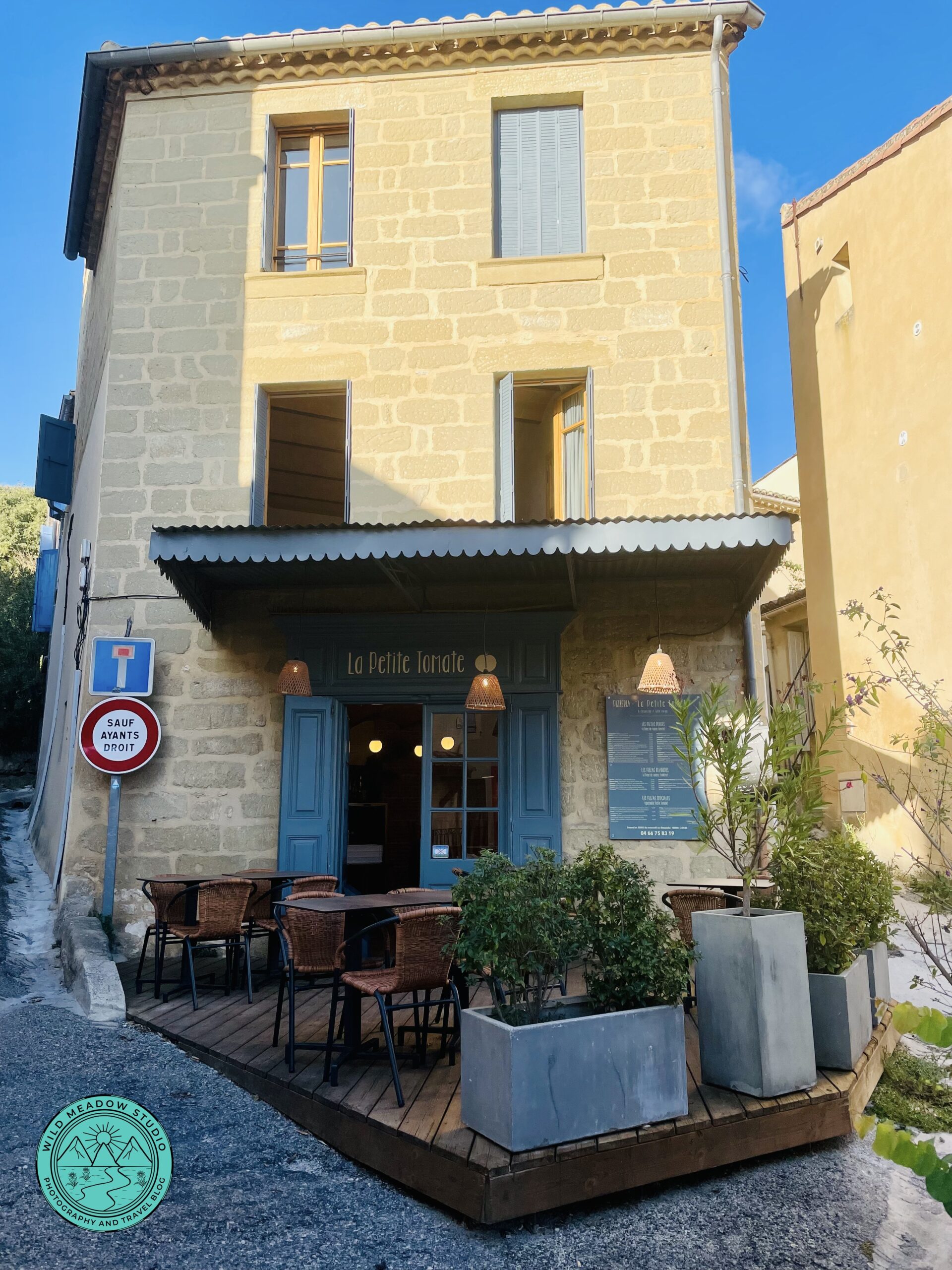
Our Airbnb in Saint-Quentin-la-Poterie
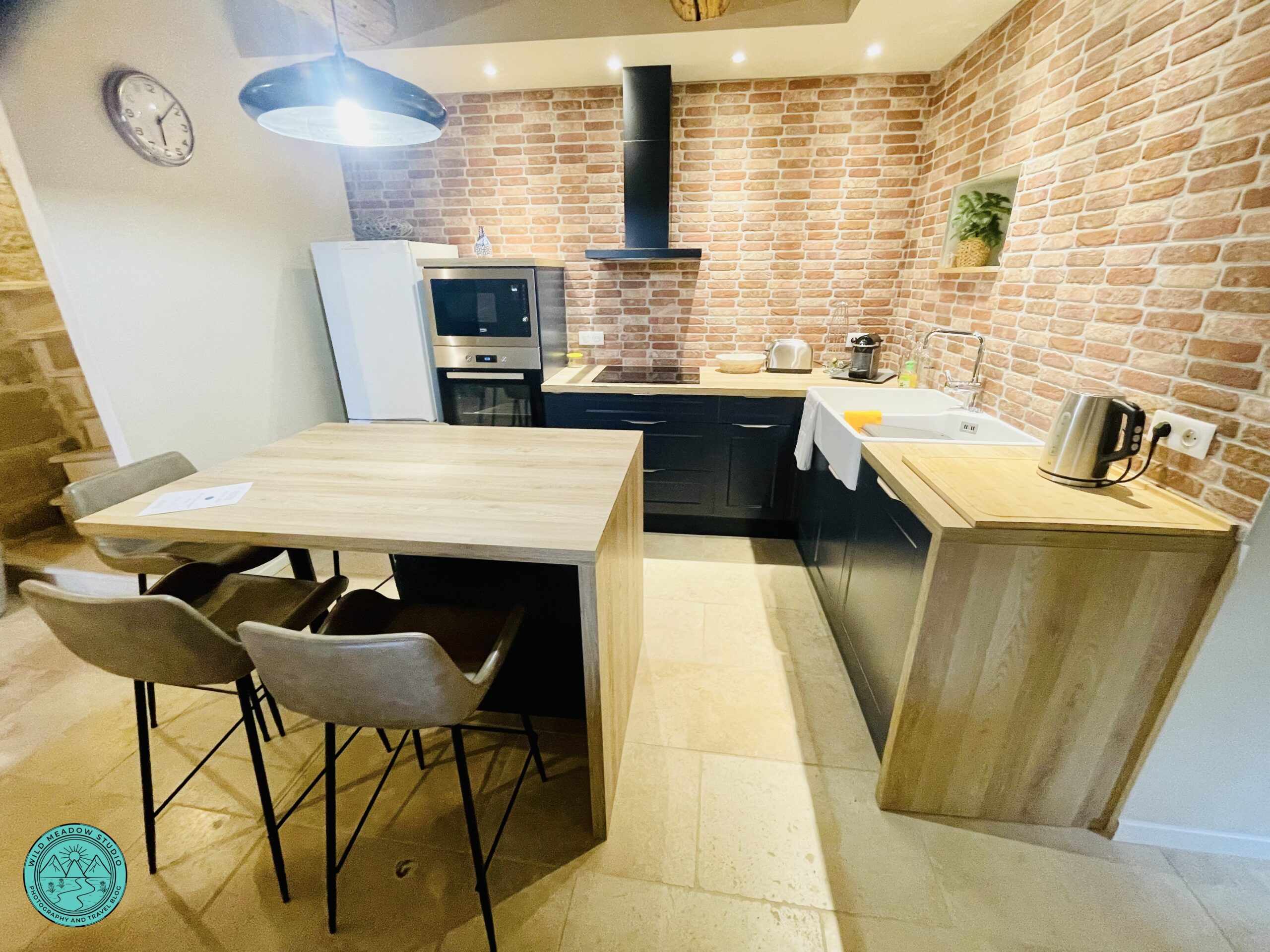
Kitchen in our Airbnb
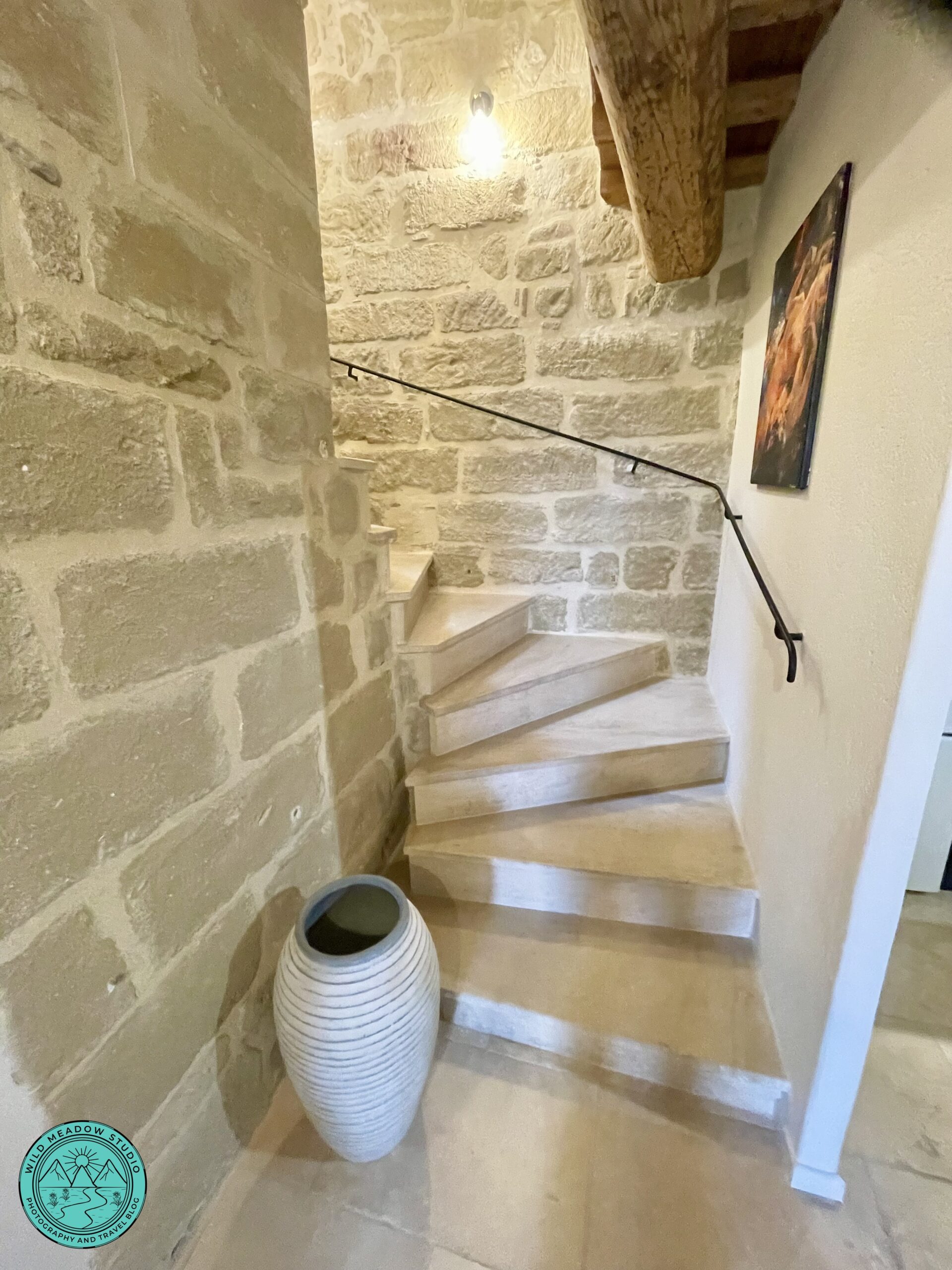
Stairway to the second floor
2. Where to Stay in Avignon, Plus One Unique Village:
For travellers looking for a stylish boutique hotel within walking distance of Avignon’s historic centre, Hôtel De Cambis is an excellent choice. Inspired by the region’s famous vineyards, the hotel combines elegant modern décor with warm Provençal touches, creating a welcoming atmosphere after a day of sightseeing.
Its location makes it easy to explore the Palais des Papes, Pont d’Avignon, local cafés, and evening restaurants without needing a car. Comfortable rooms, attentive service, and beautifully designed interiors make this an ideal choice for couples or anyone looking to enjoy a little extra comfort during their stay.
It has a 9.4 rating, with parking and breakfast for a fee and is a 10 mins walk to the Palace of the Popes.
Best for: Couples, boutique hotel lovers, city explorers.
If space and convenience are high on your priority list, Avignon Grand Hotel is an excellent option. Located just outside the medieval city walls beside the local train station, it offers larger rooms than many hotels within the old town while still being only a short walk from Avignon’s main attractions.
Guests can enjoy spacious suites, an outdoor rooftop pool during the warmer months, and secure parking, making it a great choice for travellers exploring Provence by car, with easier access getting in and out of the city.
It has an 8.6 rating, laundry facilities, parking and breakfast for a fee and is a 15 mins walk to the Palace of the Popes.
Best for: Families, road trips, longer stays.
Travellers looking for affordable accommodation with plenty of character will appreciate Hôtel Médieval. Situated within Avignon’s historic centre, this charming family-run hotel offers comfortable rooms in a traditional Provençal setting without the higher prices of many nearby boutique hotels.
Its central location means you can easily explore the city’s narrow streets, cafés, and historic landmarks on foot while enjoying a quieter atmosphere away from some of the busier tourist areas.
It has an 8.8 rating, parking and breakfast for a fee, A/C and is a 3 mins walk to the Palace of the Popes.
Best for: Budget-conscious travellers, couples, short city breaks.
One of Avignon’s most iconic luxury hotels, Hôtel d’Europe has welcomed distinguished guests for more than two centuries. Located just steps from the Palais des Papes, this elegant five-star hotel blends historic architecture with refined modern comforts.
Beautiful courtyards, exceptional service, and one of the city’s most highly regarded restaurants make this a memorable place to stay for those celebrating a special occasion or simply wanting to experience the very best of Avignon.
While it sits at the higher end of the budget, its location and historic charm make it one of the city’s most sought-after hotels.
It has a 9.4 rating, parking and breakfast for a fee, terrace, bike rentals, laundry facilities, 5 mins walk to the Palace of the Popes and is in a building built in 1580.
Best for: Luxury travellers, anniversaries, romantic getaways.
A Unique Village Stay –
Entire Unit in Saint-Quentin-la-Poterie
While Avignon makes an excellent central base, spending a few nights in one of the areas smaller villages offers an entirely different experience.
During one of our visits, we stayed in a beautifully renovated apartment in Saint-Quentin-la-Poterie, a charming village known for its thriving pottery community, relaxed atmosphere, and quiet streets lined with artisan workshops.
Unlike the larger cities, mornings here begin slowly. Local residents gather at cafés, artists open their studios, and visitors can wander the peaceful streets before the day begins and visit the impressive markets Tuesday and Friday mornings. It quickly became one of our favourite places in this region.
The apartment itself provided everything we needed, including a fully equipped kitchen, comfortable living space, and a perfect location for exploring the spectacular Pont du Gard, and other interesting places in Provence.
If you’re hoping to experience a more authentic stay in the French countryside, away from the busier tourist crowds, we highly recommend considering a stay in Saint-Quentin-la-Poterie for part of your trip.
This place has a 4.9/5.0 rating, clean, recently renovated, full kitchen, living room, 2 bedrooms, each with their own full ensuites, plus a powder room on the main floor, washer, A/C, free parking and great hosts. It is the upper 2 floors of a 3-story building with a wood oven pizzeria on the main floor, which we tried more than once and really enjoyed. We had a great stay here, highly recommend.
Best for: Slow travellers, couples, families, photographers, longer stays.
Choosing the Right Base –
If this is your first visit to Provence and you’re planning to explore several destinations, we’d recommend staying in Avignon for most of your trip. Its central location makes it easy to reach Aix-en-Provence, Arles, L’Isle-sur-la-Sorgue, Pont du Gard, and many of the region’s picturesque villages within an hour’s drive.
However, if your goal is to experience Provence at a slower pace, spending a few nights in a smaller village like Saint-Quentin-la-Poterie offers a quieter and more authentic glimpse into everyday life in southern France. Waking up to peaceful streets, local bakeries, and artisan workshops is an experience that’s difficult to find in larger cities.
Whichever you choose Provence rewards travellers who take their time. Rather than trying to see everything in one trip, allow yourself the freedom to wander, linger over long lunches, browse local markets, and discover the unexpected places that often become the most memorable.
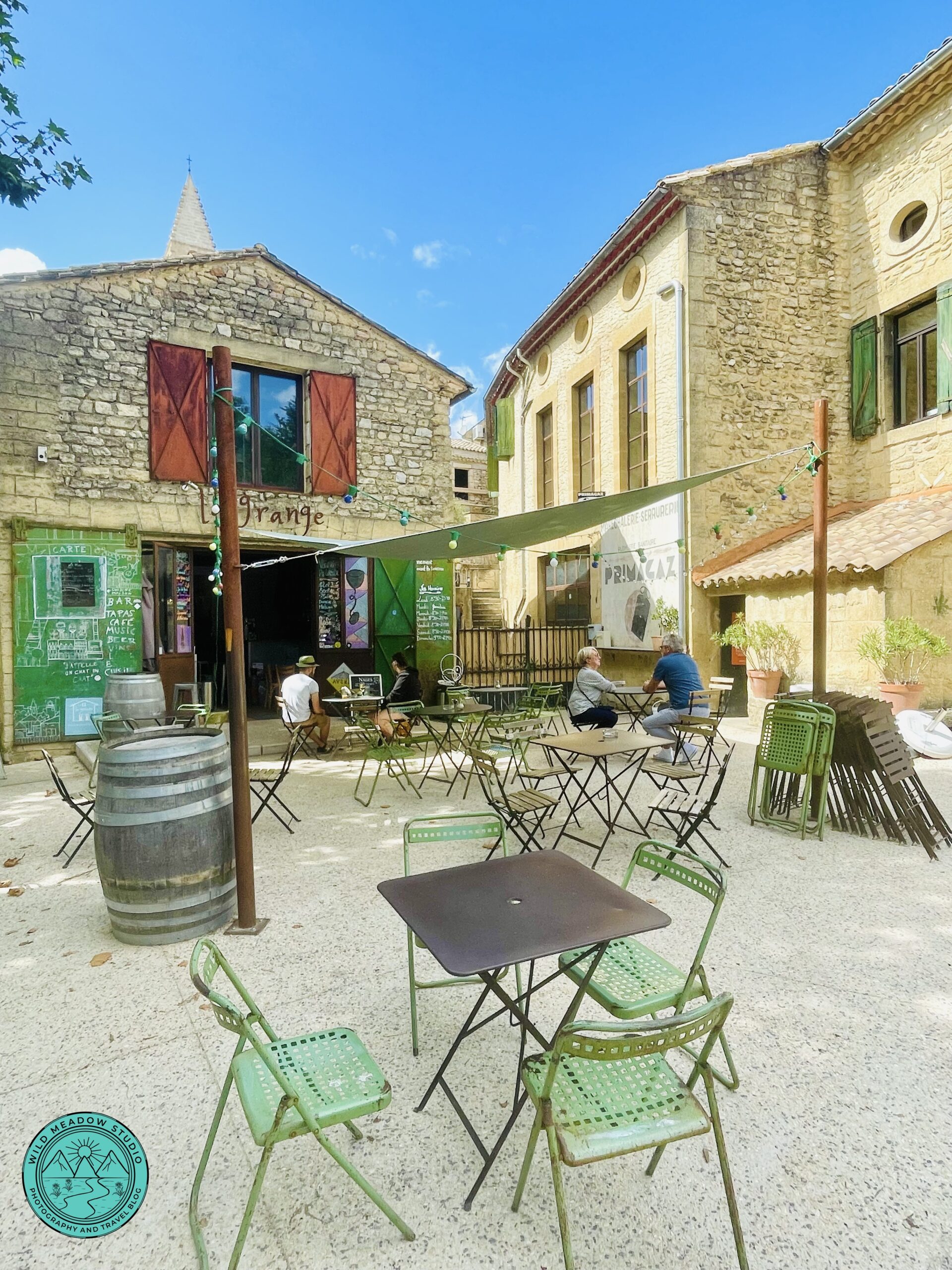
La Grange, Vers-Pont-du-Gard
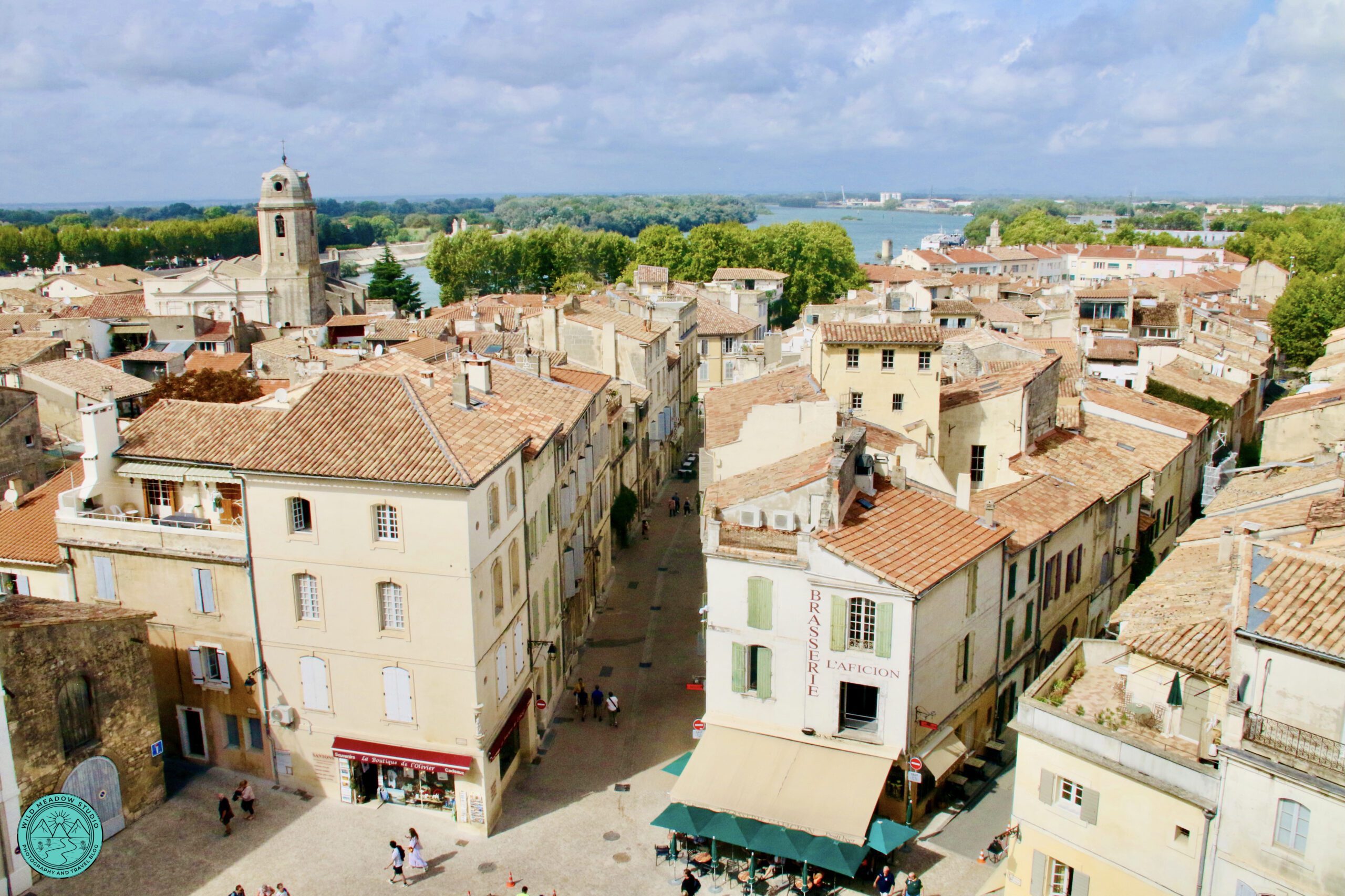
Brasserie L’Aficion (bottom right)
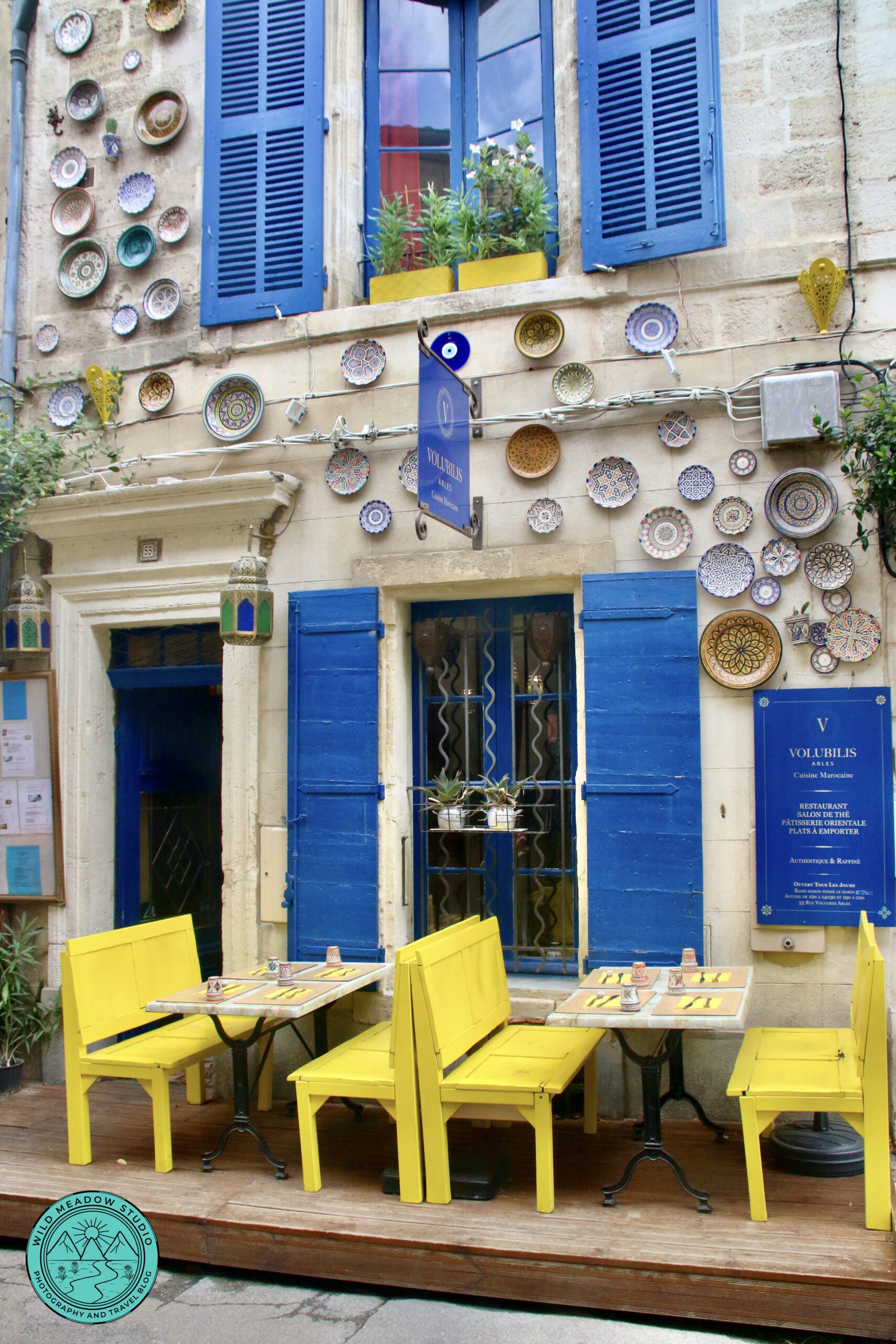
Volubilis in Arles
3. Where to Eat in and Around Provence:
One of the highlights of visiting Provence is experiencing its incredible food. From family-run bistros serving traditional Provençal recipes to cafés overlooking bustling village squares, every town offers its own unique dining experience.
While there are countless excellent restaurants throughout the region, these were some of our favourite recommendations based on quality, atmosphere, value, and consistently excellent reviews. We recommend making reservations whenever possible, especially during the busy summer months, and if there is one in particular you really want to try.
Avignon –
As the largest city in our itinerary, Avignon offers everything from casual cafés to elegant fine dining. After a day exploring the Palais des Papes and wandering the medieval streets, these restaurants are well worth adding to your list.
Located within Avignon’s historic centre, L’Atelier de Bélinda is known for its welcoming atmosphere and beautifully prepared French cuisine. Their menu changes with the seasons, showcasing fresh local ingredients and classic Provençal flavours with a modern touch. The generous portions and reasonable prices make it an excellent choice for lunch or dinner.
Cuisine: French, Mediterranean
Price: €€ ($$)
A favourite among both locals and visitors, Restaurant EAT offers creative seasonal dishes prepared using fresh regional ingredients. The menu is intentionally small, allowing the chefs to focus on quality and presentation. If you’re looking for an intimate dining experience away from the busiest tourist restaurants, this is an excellent choice.
Cuisine: French, Contemporary
Price: €€ ($$)
For a more casual meal, La Sou’pape is a great stop for homemade soups, fresh salads, sandwiches, and daily specials. It’s ideal for travellers looking for a relaxed lunch between sightseeing without stretching the budget.
Cuisine: Café, French
Price: € ($)
Aix-en-Provence –
Known for its elegant streets and lively café culture, Aix-en-Provence offers a wonderful mix of traditional French cuisine and international flavours.
One of the city’s highest-rated restaurants, TITA combines Mediterranean and Middle Eastern influences with beautifully presented dishes designed for sharing. Everything is freshly prepared, the atmosphere is lively, and prices remain surprisingly reasonable considering the quality.
Cuisine: Mediterranean
Price: €€ ($$)
Hidden on a quiet street near the city centre, Le Petit Verdot has earned a reputation for serving authentic Provençal cuisine in a relaxed setting. Daily specials highlight seasonal ingredients, making every visit slightly different.
Cuisine: Provençal, French
Price: €€ ($$)
If you’re looking for a quick but delicious lunch while exploring Aix, Empanadas Club offers freshly baked Argentinian empanadas with a variety of fillings. Affordable, convenient, and consistently well-reviewed, it’s perfect for travellers wanting something casual.
Cuisine: Argentinian
Price: € ($)
L’Isle-sur-la-Sorgue –
Famous for its canals, antique shops, and Sunday market, L’Isle-sur-la-Sorgue is also home to several excellent riverside restaurants.
Agastache serves beautifully prepared French cuisine using fresh seasonal ingredients in a peaceful setting just away from the busiest streets. Its creative menu and attentive service make it one of the town’s standout dining experiences without the premium prices of some neighbouring restaurants.
Cuisine: French, Mediterranean
Price: €€ ($$)
Located close to the river, Aux Cocottes offers classic Provençal dishes in a relaxed atmosphere. Their outdoor terrace is particularly enjoyable on warm evenings, making it an ideal place to unwind after exploring the town.
Cuisine: Provençal
Price: €€ ($$)
If you’re simply looking to enjoy a coffee, pastry, or light lunch while people-watching, Café de France is a wonderful choice in the heart of town.
Cuisine: Café
Price: € ($)
Arles –
Steeped in Roman history and famous for inspiring Vincent van Gogh, Arles offers an excellent selection of traditional Provençal restaurants.
One of Arles’ most popular restaurants, Le Criquet has been serving authentic Provençal cuisine for decades. Friendly service, generous portions, and beautifully prepared regional dishes have made it a favourite with both locals and visitors.
Cuisine: Provençal, French
Price: €€ ($$)
Just steps from the Roman Arena, this relaxed restaurant serves fresh sandwiches, salads, and regional specialities, making it an excellent stop for lunch while sightseeing.
Cuisine: French
Price: € ($)
Offering fresh salads, homemade desserts, and excellent coffee, Café Factory République is a popular choice for a casual meal in the city centre.
Cuisine: Café
Price: € ($)
Located just outside of the main entrance of the Arles Roman Arena, this restaurant has outdoor seating with great views, average prices, tapas, salads, burgers and main meals, we really enjoyed our lunch here while exploring this historic city.
Cuisine: French
Price: €€ ($$)
Located just down the street from the Arles Arena, this interesting looking restaurant serves Moroccan food, it’s open for lunch and dinner, but closed in-between. There is a little bit of seating outside, but most of it is inside. The front of this restaurant caught our eye right away, as it’s very colourful.
Cuisine: Moroccan
Price: €€ ($$)
Saintes-Maries-de-la-Mer –
Located on the Mediterranean coast within the Camargue, this charming seaside town is best known for its fresh seafood and local Camargue specialities.
Situated near the waterfront, Le Miramar serves freshly caught seafood alongside classic Mediterranean dishes. The relaxed atmosphere and generous portions make it one of the town’s most popular restaurants.
Cuisine: Seafood, Mediterranean
Price: €€ ($$)
Offering traditional Provençal cuisine with locally sourced ingredients, Chante Clair provides a quieter dining experience away from the busiest tourist areas. Their seafood and regional dishes are particularly popular.
Cuisine: French, Mediterranean
Price: €€ ($$)
Vers-Pont-du-Gard –
After visiting the spectacular Pont du Gard, there are several excellent restaurants nearby where you can relax before continuing your journey.
A charming countryside restaurant serving seasonal Provençal cuisine in a peaceful setting. The outdoor terrace is especially enjoyable during warmer months, we loved our lunch here, food was delicious and loved their homemade iced tea.
Cuisine: French
Price: €€ ($$)
Housed in a former railway station, La Petite Gare combines traditional French cooking with a welcoming atmosphere. Their daily specials showcase fresh local produce and excellent regional wines.
Cuisine: French
Price: €€ ($$)
Saint-Quentin-la-Poterie –
Although smaller than many neighbouring towns, Saint-Quentin-la-Poterie offers several excellent restaurants that perfectly capture the relaxed atmosphere of village life.
One of the village’s best-known restaurants, Le Pèbre d’Aï serves modern Provençal cuisine using fresh local ingredients. The shaded terrace provides a beautiful setting for a leisurely lunch or dinner.
Cuisine: Provençal
Price: €€ ($$)
With its welcoming atmosphere and carefully prepared seasonal menu, Le Petit Eden is an excellent place to experience authentic southern French cooking. Friendly service and fresh local ingredients make it a favourite among visitors.
Cuisine: French
Price: €€ ($$)
Located right in the small village and super cute, it has some seating inside and an outdoor patio, this wood oven pizzeria was one of our favourites, great service and delicious pizza, but only open for dinner. We ate here twice.
Cuisine: Pizza
Price: € ($)
A Few Dining Tips –
Dining in Provence is often slower than many visitors are used to—and that’s part of the experience. Meals are meant to be enjoyed, not rushed, so take your time and savour each course.
Many smaller restaurants close between lunch and dinner service, often from around 2:00 p.m. until 7:00 p.m., so plan your meals accordingly. During the summer months, reservations are highly recommended, particularly in popular destinations like Avignon, Arles, and Aix-en-Provence.
If you’re feeling adventurous, look for regional specialties such as bouillabaisse, daube provençale (a slow-cooked beef stew), ratatouille, tapenade, or dishes featuring locally produced olive oil, herbs, and fresh seafood.
No matter where you choose to eat, one thing quickly becomes clear: some of the best meals in Provence aren’t necessarily found in the most expensive restaurants, but in the small family-run establishments where fresh ingredients, local traditions, and warm hospitality take centre stage.
We’ve added either a website, if they have one, or a Tripadvisor page for you to look through for each of the restaurants in this list, some we ate at, came highly recommended or had great reviews.
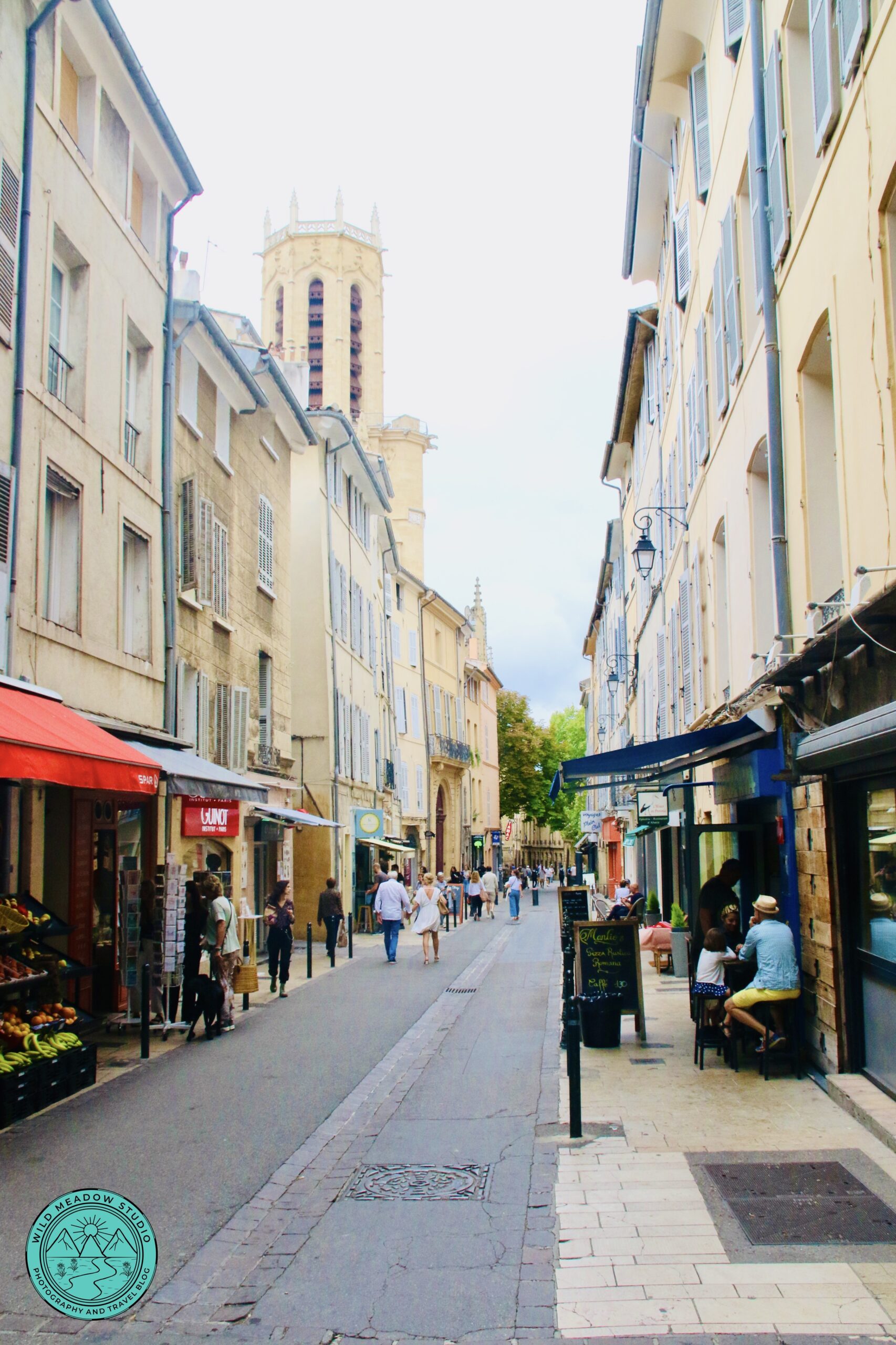
Streets in L’Isle-sur-la-Sorgue
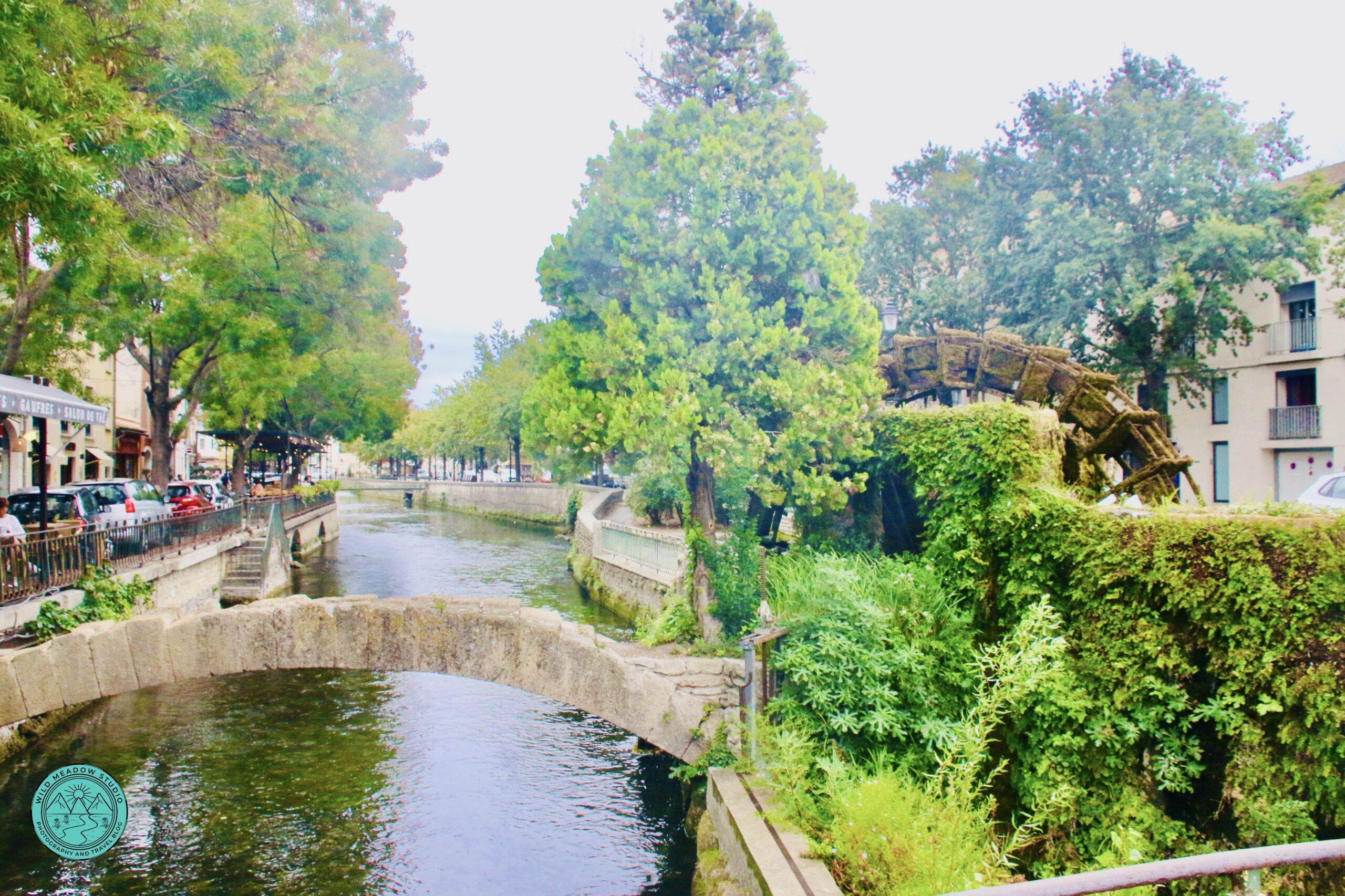
Water Wheel and old bridge in L’Isle-sur-la-Sorgue
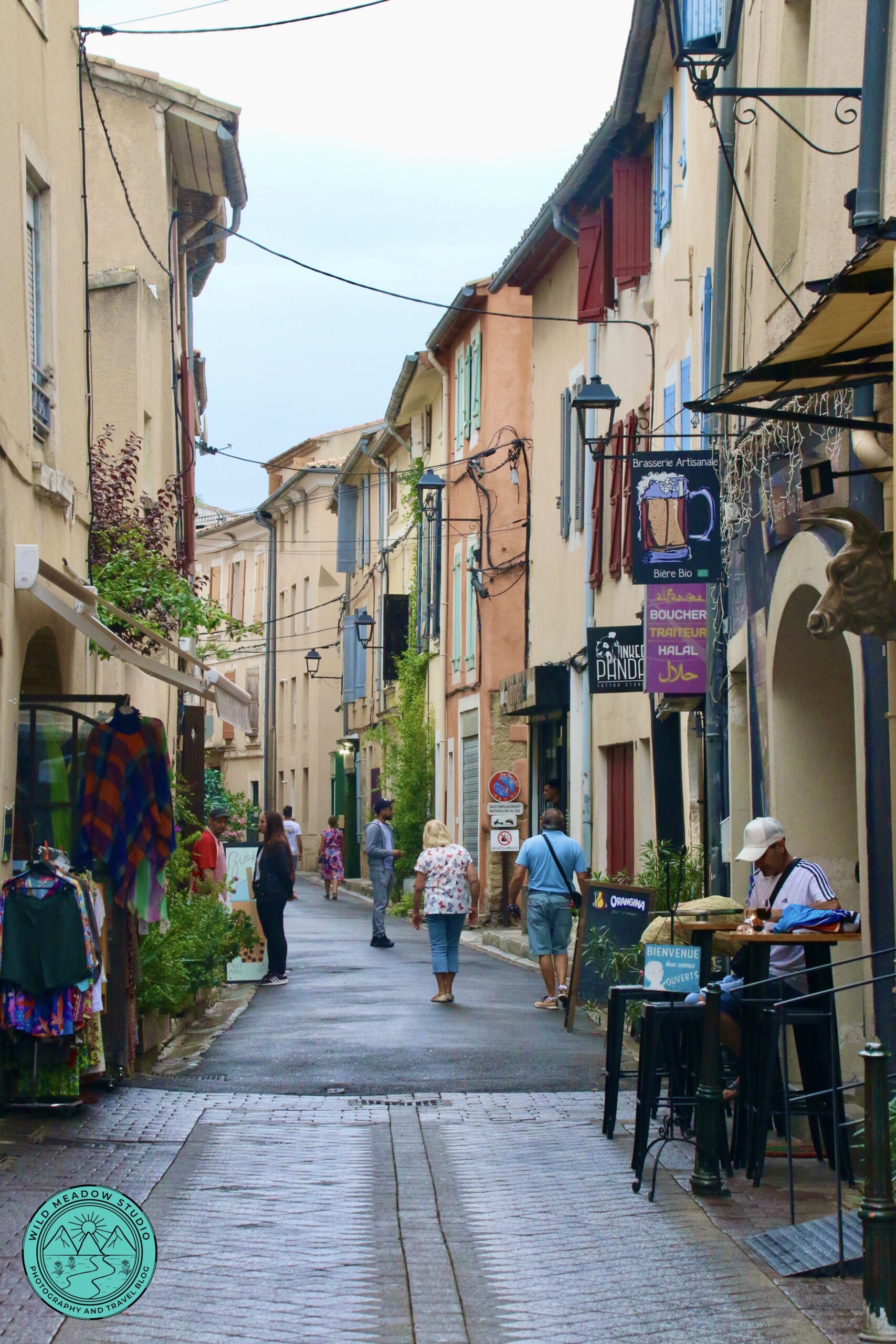
Wandering the Side Streets
4. Essential Tips for Visiting Provence:
Provence is one of those destinations that’s best enjoyed at a slower pace. While it can be tempting to fill every day with sightseeing, some of the region’s most memorable experiences come from lingering over lunch, wandering quiet village streets, or stopping at a local market you hadn’t planned to visit.
These practical tips will help you make the most of your time in Provence while avoiding some common travel frustrations.
Choose a Central Base –
If you’re planning to explore several towns, choosing one central location can save time and make your trip far more relaxing.
We found Avignon to be an ideal base. From here, you can easily visit Aix-en-Provence, Arles, L’Isle-sur-la-Sorgue, Pont du Gard, the Camargue, and Saint-Quentin-la-Poterie ( all of the towns in our Itinerary plus a lot more ) as day trips without constantly packing and unpacking your luggage.
If you prefer a quieter experience, consider spending a few nights in one of Provence’s smaller villages, where life moves at a slower pace and evenings are wonderfully peaceful.
Rent a Car –
While larger cities are connected by train, many of Provence’s most beautiful villages and attractions are difficult to reach using public transportation.
Renting a car gives you the freedom to explore scenic back roads, stop at vineyards, visit local markets, and discover charming villages that many visitors miss. We use Expedia to book all of our car rentals.
Driving is generally straightforward, and the roads are well maintained. Just remember that many historic town centres have narrow streets, so choosing a compact vehicle can make parking much easier, and we usually choose a parking lot just outside the city center. We’ve marked the parking lots we used while visiting each town on the maps in our itinerary article.
Visit Popular Attractions Early –
Some of Provence’s most famous destinations become busy by late morning, particularly during the summer months.
Arriving early allows you to enjoy quieter streets, better parking, cooler temperatures, and softer morning light for photography.
This is especially true for:
- Palais des Papes
- Pont du Gard
- Arles
- L’Isle-sur-la-Sorgue
- Aix-en-Provence
Early mornings also offer the best opportunity to experience villages before tour groups arrive. Avignon is on the River Cruise route, so it can fill up late morning, arriving at the Palace of the Popes when it opens works out well.
Plan Around Market Days –
One of the best ways to experience Provence is by visiting its outdoor markets.
Each town has its own market day, where you’ll find fresh produce, local cheeses, olives, lavender products, handmade soaps, pottery, clothing, and regional specialties.
Some of the most popular include:
- Avignon: Thursday & Saturday mornings
- Aix-en-Provence: Tuesday, Thursday, & Saturday
- L’Isle-sur-la-Sorgue: Thursday & Sunday (one of the region’s largest markets)
- Saint-Quentin-la-Poterie: Tuesday & Friday mornings
If possible, plan your itinerary around these market days for a more authentic local experience.
Book Popular Restaurants in Advance –
Many of Provence’s best restaurants are small family-run establishments with limited seating.
During the busy travel season, tables can fill quickly, particularly on weekends.
If there’s a restaurant you’re excited to visit, it’s worth making a reservation a few days ahead. This is especially important in Avignon, Arles, and Aix-en-Provence.
Speak the Language (or try) –
For some people speaking different languages comes easy and for some, it does not, I’m the latter. Although it’s not easy, we always make an effort to learn at least the pleasantries when we’re travelling. It’s one of our many favourite things to do! We also carry a language pocketbook with us, and we have google translate on our phones! We also like the free language app, Duolingo for some fun! Although many people working in tourism in France speak English, making the effort to greet locals in their language is always appreciated.
Simple phrases such as:
- Bonjour (Hello)
- Merci (Thank you)
- S’il vous plaît (Please)
- Au revoir (Goodbye)
- Je Voudrais (I would like)
- Combien (how much)
go a long way and often lead to friendlier interactions.
Carry a Reusable Water Bottle –
Summers in Provence are often hot and dry, with temperatures regularly climbing above 30°C (86°F).
Bring a reusable water bottle and refill it throughout the day. Many towns have public drinking fountains where you can top up before continuing your sightseeing.
Staying hydrated makes exploring much more enjoyable, especially during long walks. We also bring hydration crystals you can pour into your water bottle, this is great during hot days or days with a lot of walking, as well as on the plane and your arrival day as it helps balance you electrolytes and gives you a bit of energy when you are suffering from jet lag.
Dress for Walking –
Many of Provence’s towns feature cobblestone streets, uneven pathways, and historic staircases.
Comfortable walking shoes are essential, even if you’re only planning to spend a few hours exploring.
Lightweight clothing, a hat, sunglasses, and sunscreen are also highly recommended during the warmer months.
Pack for the Seasons –
Spring and autumn are wonderful times to visit Provence, with pleasant temperatures and fewer crowds, but mornings and evenings can feel cool, so packing a light jacket or sweater is a good idea.
If you’re visiting in summer, lightweight clothing is essential, but don’t forget a light layer for air-conditioned restaurants or cooler evenings.
Allow Extra Time for Photography –
If photography is part of your travels, Provence is a dream destination.
Early morning and late afternoon provide the softest light, while quieter streets make it easier to capture beautiful images without crowds.
Some of our favourite photographs weren’t taken at famous landmarks but in peaceful back streets where flowers spilled from balconies, old stone buildings glowed in the golden light, and everyday life unfolded at its own relaxed pace.
Don’t Overpack Your Itinerary –
One of the biggest mistakes visitors make is trying to see too much in too little time.
Rather than squeezing four or five towns into a single day, focus on one or two destinations and allow yourself time to enjoy each one.
Sit down for lunch, browse local markets, step inside small churches, visit artisan workshops, or simply enjoy watching everyday life unfold from a café terrace.
You’ll leave Provence with richer memories than if you spent the entire trip rushing from one attraction to the next.
Carry Some Cash –
While credit cards are widely accepted throughout Provence, it’s still a good idea to carry a small amount of cash.
Some market vendors, small cafés, village bakeries, and artisan shops may prefer cash or have minimum purchase amounts for card payments.
Having a few euros on hand can make shopping at local markets much easier.
Be Flexible –
The weather, local festivals, market schedules, unexpected stops, delays due to construction and so on, can all influence your plans. Be ready to pivot, things happen when you travel, don’t let it upset you.
Instead of trying to follow a rigid itinerary, leave room for unexpected discoveries. You may stumble across a charming village celebration, an inviting café, or a scenic viewpoint that wasn’t on your original list.
Sunrise and Sunset Times –
Check daily sunrise and sunset times before your trip to help you plan your days, especially for great lighting for photography, beach walks and in the summer, and better temperatures. Check it out here!
Using Points –
Whether it’s Airmiles, Aeroplan, hotel chains, or credit card points, collect them religiously and use them for travel!! We have stayed in some amazing places using points, some we normally wouldn’t have even looked at because of the price, we’ve used points for flights and rental cars too. They are so satisfying to use, but you have to get to know what is a good value and what isn’t. For example, if you’re using Airmiles for flights, the points cover the flight cost and you pay the taxes, so generally the taxes cost us in the range of $200/$300, which is reasonable, but if we fly to Europe from Canada, the taxes were over $700, (we were told this was because their airport taxes were higher) we were shocked, it didn’t make sense to use the points for that, so you have to get to know how to best work you’re points, but once you do, you’ll be hooked!
Start your off Day Early –
Start your day off early, this will always be our suggestion! When we say early, we’re talking 6:30/7:00am, but we know that’s not for everyone, so just get started as early as you can and always keep in mind open/closing hours and open/closing days for the attractions that you really want to see. If there is something you really want a photo of without people in the shot, start there! For more information on the advantages of getting up early, check out our posts “Three Significant Reasons to Get Up Early, while Travelling” & “How to See More, Avoid Crowds and Capture Better Photos”.
Phone service –
When travelling in Europe we use Hippocket Wifi, but they also service Canada and the United States. So, for people travelling to Canada from another country, this could be a good option for you. They are based in France, but you can simply order it online and they ship it directly to you 3-5 days before you leave for your trip. It comes with a small carrying case, charger, (including a car charger if needed) and an addressed, stamped return mailing envelope, so you simply drop it off in the mailbox at the airport/ferry terminal/train station before heading home. The great thing about this is that if you are traveling with other people, you can all use it and share in the cost or if you’re a family you can all use it. You can have up to 8-10 users at the same time. If you have multiple users, I recommend getting the unlimited options, as the 1GB/day option may not be enough. The unlimited works out to be approximately 7.00 to 9.00 euros per day, including all shipping, (because they are based in France, they charge you in euros). It’s a great option, check it out here!
Our Final Tip –
Perhaps the best advice we can offer is simply this: slow down.
Provence isn’t a destination to rush through. It’s a place to savour long lunches, browse local markets, chat with shop owners, and wander without a plan. Some of our favourite memories weren’t the famous landmarks—they were the quiet moments spent discovering hidden streets, colourful doorways, peaceful canals, and small villages that encouraged us to pause and simply enjoy where we were.
Give yourself permission to travel at a slower pace, and you’ll discover the true charm of Provence.
- Plan enough time to explore beyond the major attractions.
- Travel with curiosity and leave room for unexpected discoveries.
- Capture not just the famous landmarks, but the quiet moments that make Provence unforgettable.
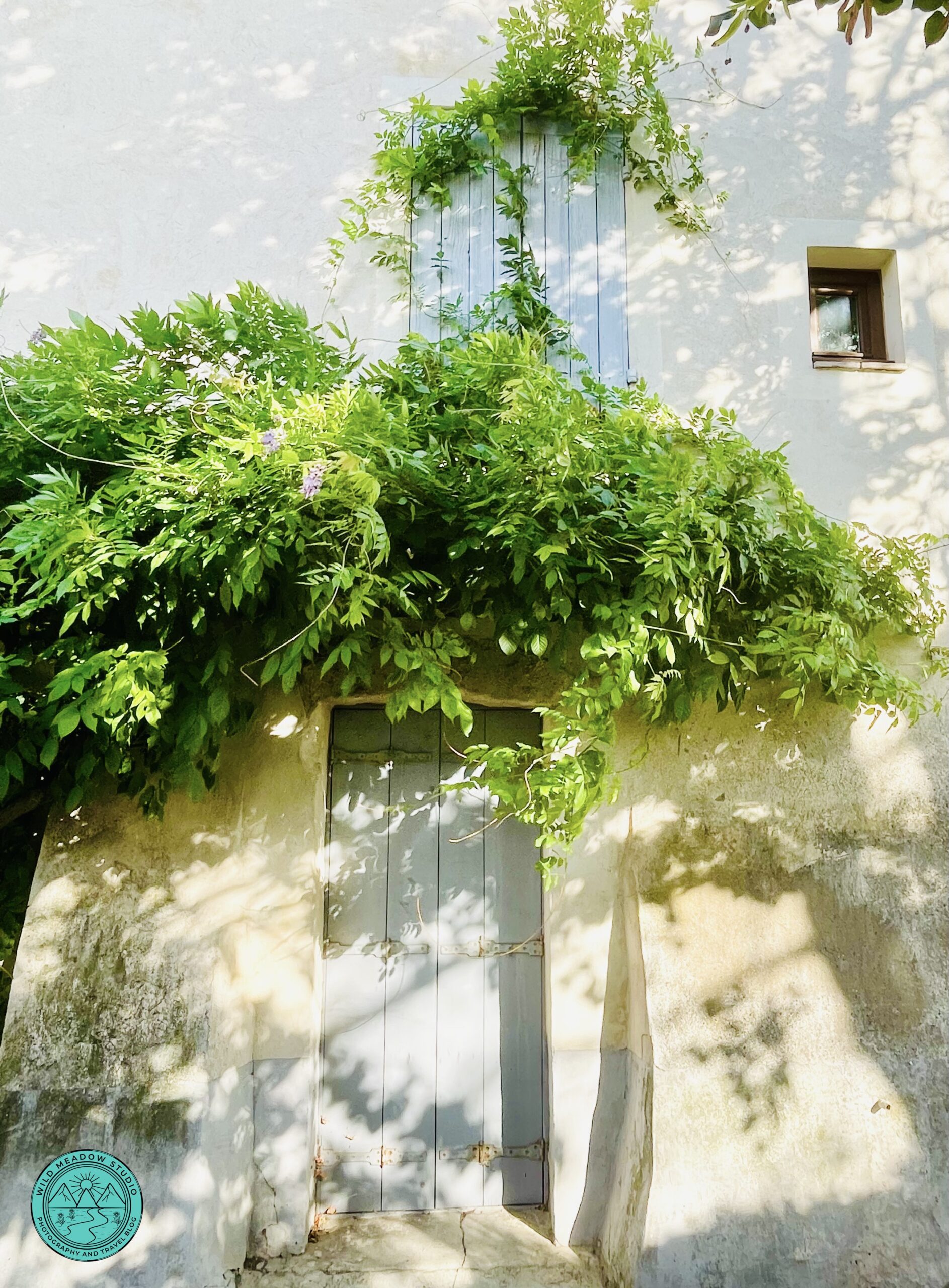
Side Street, Saint-Quentin-la-Poterie
5. Our Fav Photo from Out Time in Provence:
We choose this photo for a few reasons, our love of old doors and windows, the mix of soft colours of the door and vibrant colours of the vines, as well as the memories it brings when we look at it of that relaxing day. We were wandering the quiet back streets of Saint-Quentin-la-Poterie, browsing the pottery shops and simply enjoying the relaxed pace of this charming village, when we came across this beautiful doorway. The weathered blue door was lovely on its own, but it was the vines gently swaying in the breeze that caught our eye and made us stop. Moments like these are why we love to slow down when we travel. They’re easy to walk past, but when you take the time to notice the little details, they often become some of the most memorable moments of the journey. When taking photos of doorways or windows, they are generally better in portrait and often more interesting if there is something next to it or over it, like the vines or maybe a flowerpot, shutters, an awning, that you can add into the photo to make it more interesting. There wasn’t much we had to do to this photo as far as editing, just enhanced it to bring out the already vibrant colours.
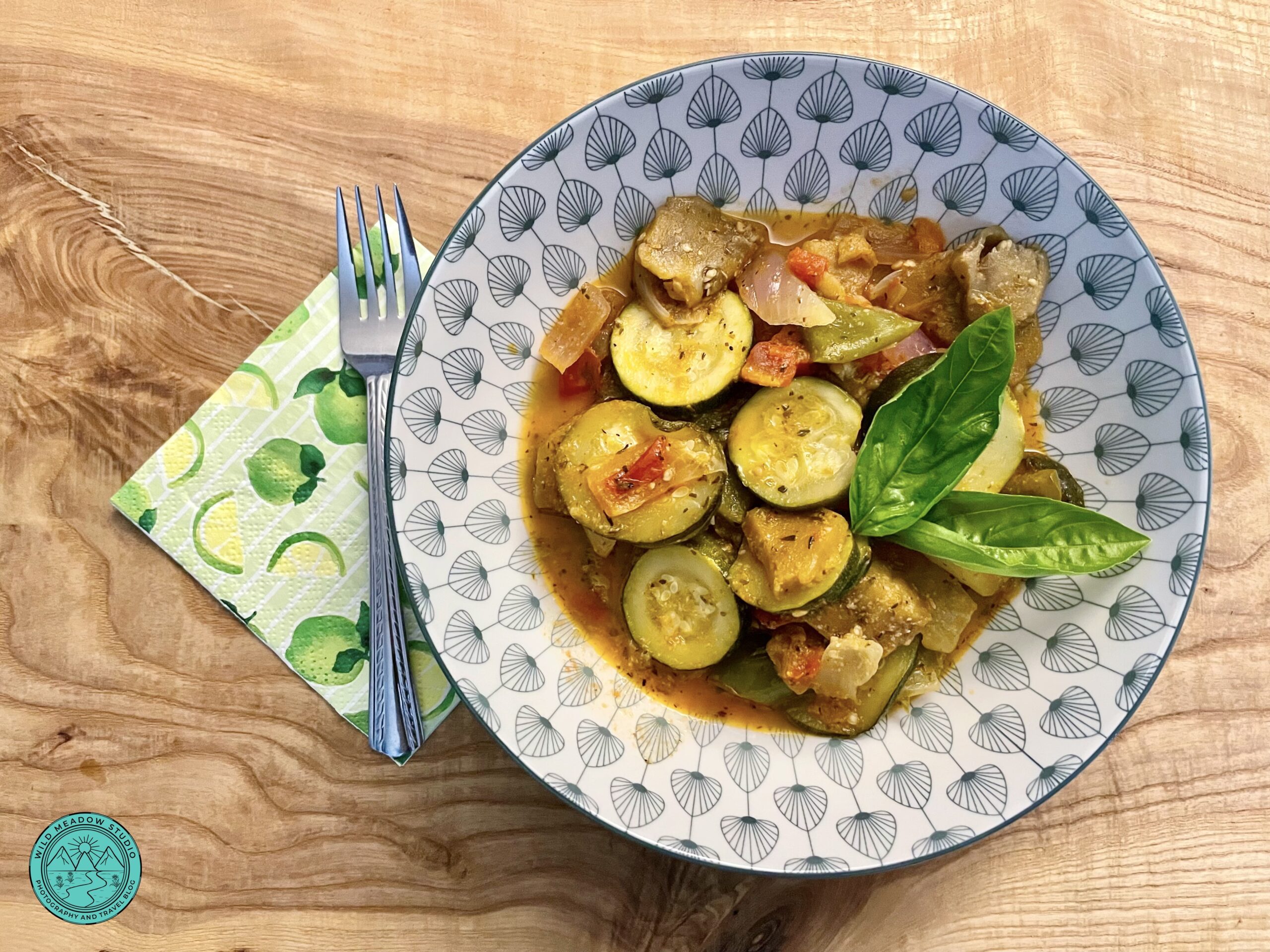
Traditional Ratatouille from Provence
6. How to Make Ratatouille from Provence:
A Taste of Provence
Our Provence journey doesn’t end when we leave France. In our next travel article, we’ll be bringing a little taste of Provence home with a classic dish that’s synonymous to the region: Ratatouille. This colourful, rustic vegetable dish is made with summer favourites like tomatoes, zucchini, eggplant, peppers, onions, garlic, and fragrant Provençal herbs. It’s simple, wholesome, and full of the flavours of southern France. We’ll share our take on this traditional Provençal recipe, inspired by our travels and the fresh, local flavours we enjoyed along the way. So, gather your vegetables, pour yourself a glass of something French, and join us for a taste of Provence at home!
Check it our here: How to Make Ratatouille from Provence, France
Plan. Travel. Capture.
7. References:
For our Provence, France Travel Series, we created our top things to do, itinerary, and tips and recommendations from our own experiences we had while visiting this beautiful area. As well, we read the helpful travel books, Eyewitness Top 10 Provence and The Côte D’Azur and Rick Steves France, which helped shape our adventure. In addition, we like to explore the official tourism websites, like (France.fr/en/destination/provence) attraction sites, public transportation resources (like buses, ferries, and trains), and a few local food blogs to see what local foods pique our interest. Google Maps for driving and walking distances, travel apps like OMIO for train travel and tour apps for any activities, like Get Your Guide, Viator or Expedia. We hope you find this Travel Guide helpful when planning your own adventure to this beautiful region of France.

Café Stop
8. The Wrap Up:
From the medieval streets of Avignon and the colourful markets of Aix-en-Provence to the peaceful canals of L’Isle-sur-la-Sorgue, the Roman history of Arles, and the quiet charm of villages like Saint-Quentin-la-Poterie, Provence is a destination that invites you to slow down and truly savour the journey.
Choosing the right place to stay, discovering local restaurants, and allowing time to wander beyond the main attractions will help you experience the region in a more meaningful way. Whether you’re enjoying a leisurely lunch on a shaded terrace, browsing a village market, or simply pausing to admire a beautiful doorway covered in climbing vines, it’s often these small, unexpected moments that become the memories you’ll treasure most.
We hope this guide helps you plan a memorable trip and inspires you to experience Provence at your own pace. With its welcoming villages, incredible food, rich history, and breathtaking scenery, it’s a destination that has a way of staying with you long after you’ve returned home.
Next week, we’ll wrap up our Provence travel series by bringing a taste of southern France into your own kitchen with a traditional Provençal recipe inspired by our travels. It’s the perfect way to relive your journey—or begin dreaming about your next one.
Planning a trip to this destination?
We offer a personalized travel planning service to help you build a relaxed, memorable trip that’s uniquely yours. Contact us today to make your appointment and let’s plan something special. Our initial planning session is complimentary. If you choose to book accommodations, car rentals, trains, tours, or activities through our recommended affiliate links, it helps support our small business, at no additional cost to you.
Our relaxed, early morning travel style is something we love, so much so, we wrote a blog and 2 free downloadable travel guides on it, “Your Daily Slow Travel Planner + Bonus Slow Morning Blueprint” request your free copies at the top of the page or through one of our pop ups.
Plan Better. Travel Slower. Capture More.
Thank you,
Beth
Beth de Verteuil
Wild Meadow Studio
Travel Guides & Photography
Plan. Travel. Capture.